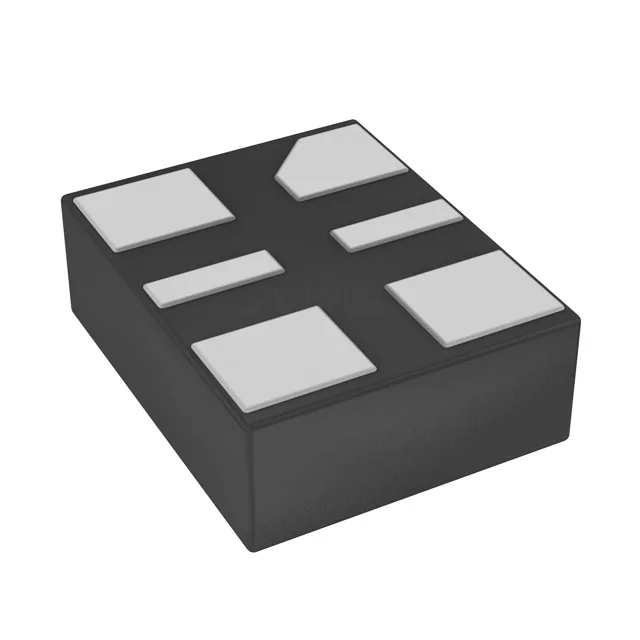
Microchip Technology DSC2311KI1-R0046 — Crystals & Oscillators

DSC2311KI1-R0046 MEMS XO – Dual 19.2 MHz CMOS, Active

MPNDSC2311KI1-R0046
Active

Microchip DSC2311KI1-R0046, XO (Standard) in 6-VDFN, dual 19.2 MHz CMOS outputs, ±25 ppm stability, -40 to 85°C, Enable/Disable function

Independent supplier — new & surplus stockAuthenticity-screened · ESD-safe packingListing updated Aug 2026

Specifications

DSC2311KI1-R0046 specifications
ParameterValue
TypeXO (Standard)
SeriesDSC2311
Supply voltage2.25V ~ 3.6V
Current - supply (Disable)23 mA
Frequency stability±25ppm
Frequency - output 119.2MHz
Frequency - output 219.2MHz
Operating temperature-40°C ~ 85°C
Height0.035\" (0.90mm)
Size (Dimension)0.098\" L x 0.079\" W (2.50mm x 2.00mm)
OutputCMOS
PackageTube
FunctionEnable/Disable
Base resonatorMEMS
Case6-VDFN

Product details

Dual 19.2 MHz clock source in a single 6-VDFN package

With a supply range of 2.25V to 3.6V, it runs directly off a 2.5V or 3.3V rail without an external LDO.

Industrial temperature grade and frequency stability

The ±25 ppm frequency stability covers temperature, supply, and aging — tight enough for 10/100 Ethernet, USB full-speed, and general-purpose microcontroller clocking without external trimming.

Enable/Disable function for power-sensitive designs

Frequently asked questions

Is the DSC2311KI1-R0046 a MEMS oscillator?

Yes — the base resonator is MEMS, not a quartz crystal. This gives it better shock/vibration tolerance and faster startup than a quartz-based XO.

What is the exact footprint and package type of the DSC2311KI1-R0046?

It comes in a 6-VDFN package measuring 2.50 mm x 2.00 mm with a seated height of 0.90 mm. The 6-pin DFN footprint is common across the DSC2311 family.

Can the DSC2311KI1-R0046 replace a standard quartz oscillator?

Functionally yes — it outputs a standard CMOS clock at 19.2 MHz. The MEMS base resonator means it is more robust to vibration and starts faster than quartz, but the electrical interface (CMOS output, 2.25-3.6V supply) is the same. Confirm the pinout and enable polarity match your board before substitution.