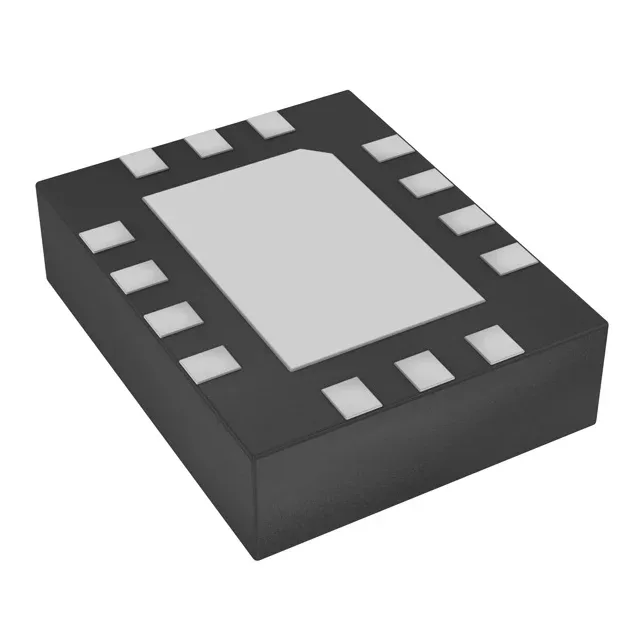
Microchip Technology DSC2130FI2-C0006 — Crystals & Oscillators

DSC2130FI2-C0006 MEMS XO 200 MHz LVDS

MPNDSC2130FI2-C0006
Active

Microchip Technology DSC2130FI2-C0006, XO (Standard) MEMS oscillator, 200 MHz LVDS output, ±25 ppm stability, 2.25 V–3.6 V supply, -40°C to 85°C, 14-SMD no-lead package.

Independent supplier — new & surplus stockAuthenticity-screened · ESD-safe packingListing updated Aug 2026

Specifications

DSC2130FI2-C0006 specifications
ParameterValue
TypeXO (Standard)
SeriesDSC2130
Supply voltage2.25V ~ 3.6V
Current - supply32mA
Current - supply (Disable)23 mA
Frequency stability±25ppm
Frequency - output 1200MHz
Operating temperature-40°C~85°C
Height0.035\" (0.90mm)
Size (Dimension)0.126\" L x 0.098\" W (3.20mm x 2.50mm)
OutputLVDS
PackageTube
Base resonatorMEMS
Case14-SMD, No Lead

Product details

200 MHz LVDS clock source — MEMS, not quartz

The DSC2130FI2-C0006 delivers a 200 MHz LVDS output from a MEMS resonator — no quartz crystal inside.

Supply range and current draw — BOM-fit note

Runs from a single 2.25 V to 3.6 V rail — the wide tolerance lets it share a 2.5 V or 3.3 V supply without an extra LDO.

14-SMD no-lead package — board-level fit

Housed in a 14-SMD no-lead package measuring 3.20 mm x 2.50 mm with a 0.90 mm seated height. The no-lead footprint reduces parasitic inductance on the output trace compared to a through-hole can — relevant for maintaining LVDS signal integrity at 200 MHz.

No direct pin-compatible replacement or second-source cross has been published.

Frequently asked questions

What is the output type and frequency of DSC2130FI2-C0006?

It outputs LVDS at 200 MHz. The LVDS differential pair provides a clean clock for high-speed serial links, FPGAs, or SerDes transceivers where single-ended CMOS would introduce common-mode noise.

Does DSC2130FI2-C0006 have a direct replacement or equivalent part?

No pin-compatible equivalent or second-source cross is published by Microchip for this order code. The base product number DSC2130 covers multiple frequency and stability options; verify the exact -C0006 suffix for your BOM line.

What is the difference between MEMS and quartz oscillators?

MEMS oscillators use a silicon micro-electromechanical resonator instead of a quartz crystal. They are typically more shock- and vibration-tolerant, have shorter start-up times, and do not require a separate load-capacitance tuning circuit. The phase-noise profile differs from quartz — review the DSC2130 phase-noise plot in the datasheet for your integration band.