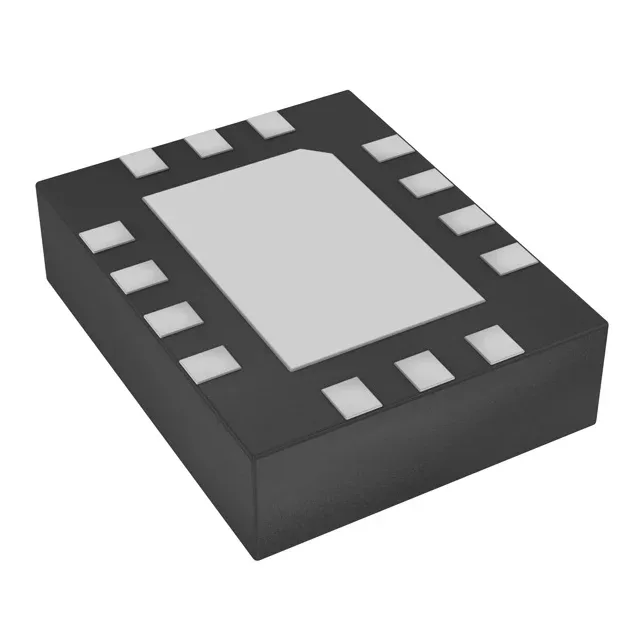
What this 156.25 MHz MEMS oscillator does that a quartz can't
The DSC2130FE1-C0008 is a MEMS-based XO (Standard) oscillator from Microchip's DSC2130 series, delivering a 156.25 MHz LVDS output — the common reference frequency for 10GbE, SFP+ modules, and FPGA gigabit transceivers. The MEMS resonator gives it a significant edge over quartz in shock and vibration environments: no spurious modes from mechanical resonance, no frequency jump from a dropped board. The 2.25V–3.6V supply range lets it run directly off a 2.5V or 3.3V rail without an intermediate regulator, which simplifies the power tree on a dense SERDES board.
Stability and temperature — the ±50 ppm window
For a 156.25 MHz reference, that translates to a maximum frequency error of ±7.8 kHz — well within the capture range of a typical Ethernet PHY's CDR (clock-data recovery) loop. The commercial temperature grade means this part is intended for indoor equipment, office networking gear, or telecom racks where the ambient stays above freezing. If your design lives in an unheated enclosure or sees engine-bay temperatures, you would need the industrial-grade DSC2130 variant.
In the disabled state the supply current drops to 23 mA max, compared to 32 mA max when active. That 9 mA saving per oscillator matters on a line card with 48 ports — it adds up to over 400 mA saved during low-traffic periods.
Package and board layout — 14-SMD no-lead
Housed in a 14-SMD no-lead package measuring 3.20 mm x 2.50 mm with a 0.90 mm height. The no-lead (LCC) footprint has a central ground pad that should be stitched to the ground plane with multiple vias to keep the thermal impedance low and the LVDS signal return path clean. The 0.50 mm pad pitch is standard for this form factor; a two-layer board can route it, but a four-layer stack-up with a dedicated ground plane under the oscillator gives cleaner LVDS edge rates.