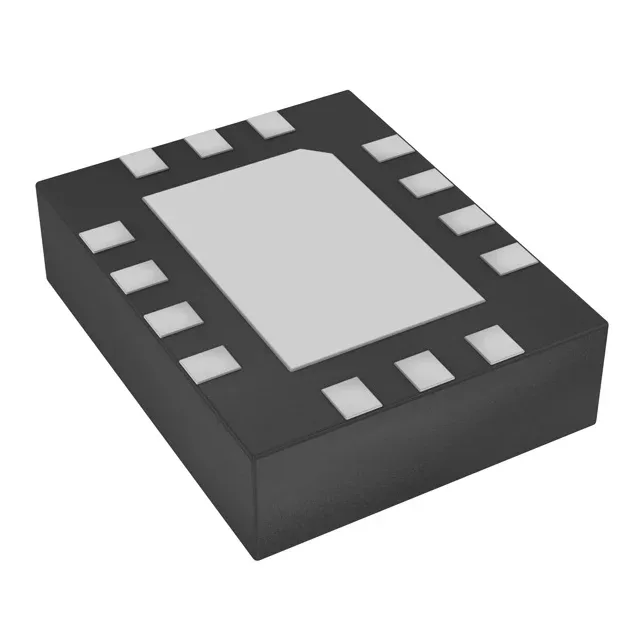
Microchip Technology DSC2044FL1-F0022T — Crystals & Oscillators

DSC2044FL1-F0022T MEMS XO – Dual 100 MHz HCSL, Active

MPNDSC2044FL1-F0022T
Active

Microchip DSC2044FL1-F0022T, MEMS-based XO (Standard), dual 100 MHz HCSL outputs, ±50 ppm stability, -40°C to 105°C, 14-VFQFN exposed pad, enable/disable function.

Sourced new & surplus through independent channelsAuthenticity-screened · ESD-safe packingListing updated Aug 2026

Specifications

DSC2044FL1-F0022T specifications
ParameterValue
TypeXO (Standard)
SeriesDSC2044
Voltage2.25V ~ 3.6V
Current - supply60mA (Typ)
Current - supply (Disable)23 mA
Frequency stability±50ppm
Frequency - output 1100MHz
Frequency - output 2100MHz
Operating temperature-40°C~105°C
Height0.035\" (0.90mm)
Size (Dimension)0.126\" L x 0.098\" W (3.20mm x 2.50mm)
OutputHCSL
PackageTape & Reel (TR)
FunctionEnable/Disable
Base resonatorMEMS
Case14-VFQFN Exposed Pad

Product details

Dual 100 MHz HCSL clock source – MEMS reliability

HCSL (High-Speed Current Steering Logic) is the typical reference clock for PCIe Gen1/2/3, Ethernet PHYs, and FPGA transceivers – the 60 mA max supply current covers both output lanes, making it a single-chip replacement for a pair of discrete oscillators.

Temperature grade and supply flexibility

The supply voltage spans 2.25 V to 3.6 V, so it runs from a 2.5 V or 3.3 V rail without an extra regulator.

Housed in a 14-VFQFN with exposed pad (3.20 mm x 2.50 mm, 0.90 mm height), the package requires a thermal pad on the PCB for heat sinking – the exposed paddle must be soldered to a ground plane to keep junction temperature within limits. The 0.50 mm pitch QFN demands careful fan-out; a 4-layer board with microvias under the pad is typical for production.

RoHS compliance is standard for this series (no explicit exemption noted).

Frequently asked questions

Does DSC2044FL1-F0022T support an enable/disable function?

Yes, the part includes an enable/disable function. When disabled, the supply current drops to 23 mA max, allowing the system to gate the clock outputs for power management.

What is the difference between DSC2044 and DSC2043?

The DSC2044 provides two identical-frequency outputs (both 100 MHz in this variant), while the DSC2043 typically offers two different frequencies. The DSC2044 is suited for applications needing a redundant or fanned-out clock at the same frequency.