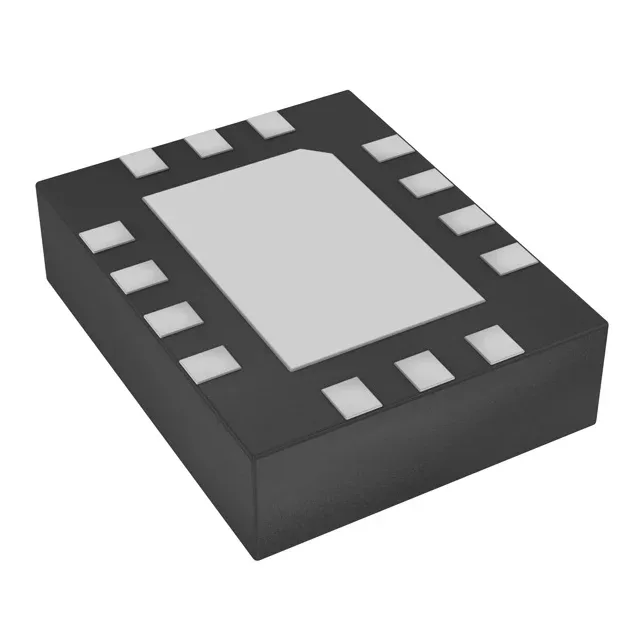
Microchip Technology DSC2042FI2-M0005T — Crystals & Oscillators

DSC2042FI2-M0005T MEMS XO – 156.25 MHz & 25 MHz, HCSL/LVPECL

MPNDSC2042FI2-M0005T
Active

Microchip DSC2042 series MEMS XO (Standard), dual output 156.25 MHz & 25 MHz, HCSL/LVPECL, ±25 ppm stability, -40°C to 85°C, 14-VFQFN Exposed Pad, Tape & Reel

Sourced new & surplus through independent channelsAuthenticity-screened · ESD-safe packingListing updated Aug 2026

Specifications

DSC2042FI2-M0005T specifications
ParameterValue
TypeXO (Standard)
SeriesDSC2042
Voltage2.25V ~ 3.6V
Current - supply76mA (Typ)
Current - supply (Disable)23 mA
Frequency stability±25ppm
Frequency - output 1156.25MHz
Frequency - output 225MHz
Operating temperature-40°C~85°C
Height0.035\" (0.90mm)
Size (Dimension)0.126\" L x 0.098\" W (3.20mm x 2.50mm)
OutputHCSL, LVPECL
PackageTape & Reel (TR)
FunctionEnable/Disable
Base resonatorMEMS
Case14-VFQFN Exposed Pad

Product details

Dual-frequency clock in a 14-VFQFN package

The DSC2042FI2-M0005T is a MEMS-based XO (Standard) that delivers two independent output frequencies: 156.25 MHz on output 1 and 25 MHz on output 2, selectable between HCSL and LVPECL logic families. Housed in a 14-VFQFN Exposed Pad package measuring 3.20 mm x 2.50 mm with a 0.90 mm profile, it fits tight board stacks where a single oscillator replaces two cans.

Expect it in outdoor telecom cabinets, factory-floor PLCs, and engine-bay control modules where ambient heat cycles are the norm.

Current consumption and disable mode

Maximum supply current is 76 mA typical when both outputs are active — the dual-frequency architecture draws about what a single high-speed XO would, thanks to the MEMS resonator core. That is the quiescent draw of the internal bias circuits; the outputs are tri-stated, so the downstream logic sees no clock edge.

Supplied in Tape & Reel (TR) from Microchip.

Frequently asked questions

Can the DSC2042FI2-M0005T replace a standard quartz oscillator on the same board?

Functionally yes — it is a drop-in XO replacement with the same 14-VFQFN footprint. The MEMS resonator is more shock and vibration tolerant than quartz, but the output logic (HCSL or LVPECL) must match the receiver. Verify the load termination: LVPECL needs a DC bias network; HCSL typically uses a 50-ohm pull-up to VDD.