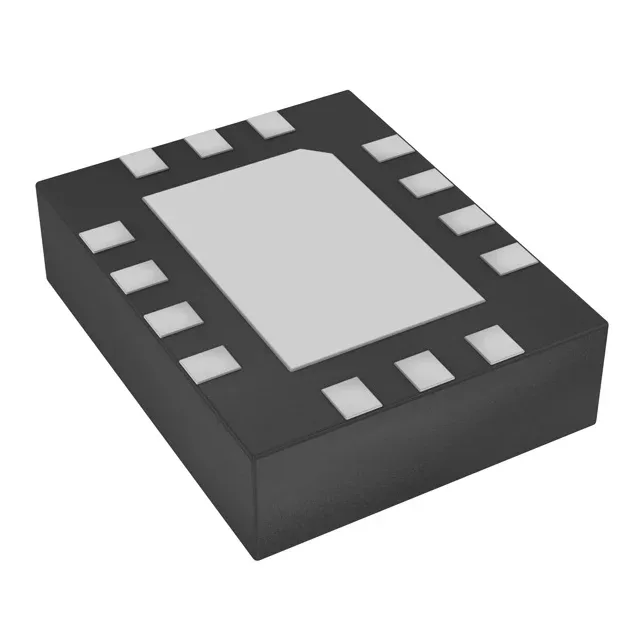
Microchip Technology DSC2033FI2-F0031 — Crystals & Oscillators

DSC2033FI2-F0031 Microchip MEMS XO, 100 MHz + 10 MHz LVDS

MPNDSC2033FI2-F0031
Active

Microchip DSC2033FI2-F0031, MEMS-based XO (Standard), dual LVDS outputs at 100 MHz and 10 MHz, ±25 ppm stability, -40°C to 85°C, 2.25-3.6 V supply, 14-VFQFN exposed-pad package.

Independent supplier — new & surplus stockAuthenticity-screened · ESD-safe packingListing updated Aug 2026

Specifications

DSC2033FI2-F0031 specifications
ParameterValue
TypeXO (Standard)
SeriesDSC2033
Supply voltage2.25V ~ 3.6V
Current - supply38mA (Typ)
Current - supply (Disable)23 mA
Frequency stability±25ppm
Frequency - output 1100MHz
Frequency - output 210MHz
Operating temperature-40°C ~ 85°C
Height0.035\" (0.90mm)
Size (Dimension)0.126\" L x 0.098\" W (3.20mm x 2.50mm)
OutputLVDS
PackageTube
FunctionEnable/Disable
Base resonatorMEMS
Case14-VFQFN Exposed Pad

Product details

What this MEMS oscillator does — two clocks, one package

The DSC2033FI2-F0031 is a MEMS-based XO (Standard) that generates two independent LVDS clock outputs: 100 MHz on Output 1 and 10 MHz on Output 2, both from the same silicon die.

Supply voltage and temperature — fits 3.3 V and 2.5 V rails

Package and board layout — 14-VFQFN with exposed pad

The LVDS output pair requires 100-ohm differential trace impedance on the PCB; the 38 mA max supply current is dominated by the output driver, so the thermal budget is modest.

No stock-holding claim — quoted per order.

Frequently asked questions

Does the DSC2033FI2-F0031 have an enable/disable function?

Yes, the function is Enable/Disable. When disabled, the supply current drops to 23 mA max — the outputs go high-impedance, not a fixed logic level.

Is the DSC2033FI2-F0031 replaceable by another Microchip oscillator with the same pinout?

The DSC2033 series shares the same 14-VFQFN footprint and pinout across frequency options. A different DSC2033 variant with the same package and supply range is a drop-in replacement if the output frequencies match your clock tree. Confirm the output frequencies and stability grade before substituting.

What is the difference between the DSC2033FI2-F0031 and a standard quartz oscillator?

The DSC2033 uses a MEMS resonator instead of a quartz crystal. MEMS oscillators start up faster (typically <5 ms vs 10-20 ms for quartz), survive higher shock and vibration, and have a wider operating temperature range. The trade-off is higher phase noise and jitter compared to a high-end quartz oscillator — fine for digital logic and Ethernet, not for RF synthesis or precision timing.