The 2.25V to 3.6V supply range lets it share a 2.5V or 3.3V rail without an intermediate regulator, and the enable/disable function allows the output to be tri-stated for system power management.
LVDS output and MEMS resonator advantages
LVDS differential signaling provides better noise immunity than single-ended CMOS or TTL outputs, making this oscillator suitable for clock distribution over longer PCB traces or through connectors in noisy environments. A MEMS base resonator offers faster startup than a quartz crystal and is more resistant to vibration and shock — a practical advantage in portable or industrial equipment where a quartz oscillator might fail to start or drift.
Package, footprint, and board layout
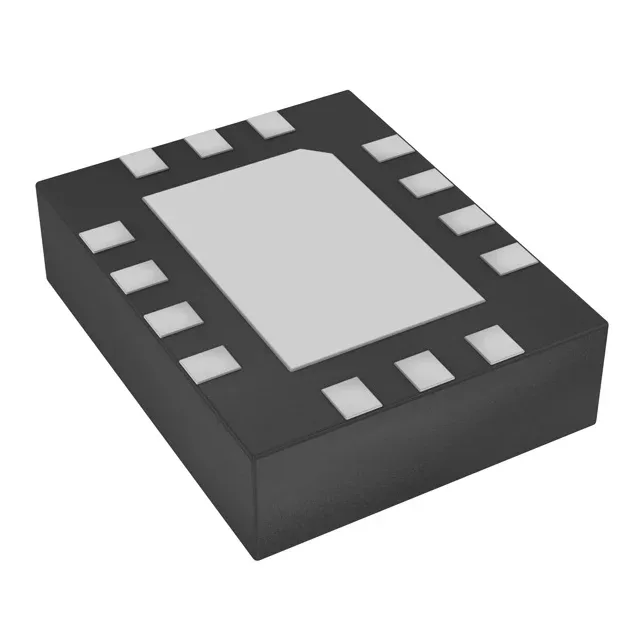
The 14-VFQFN exposed pad package measures 3.20 mm x 2.50 mm with a 0.90 mm seated height. This is a surface-mount part supplied in tube.