MEMS oscillator with dual independent clock outputs
Output 1 can be set to 24, 25, 27, 48, 50, or 54 MHz; Output 2 to 24, 27, 50, 54, or 125 MHz. That covers a microcontroller core clock and a USB or Ethernet PHY reference from one package.
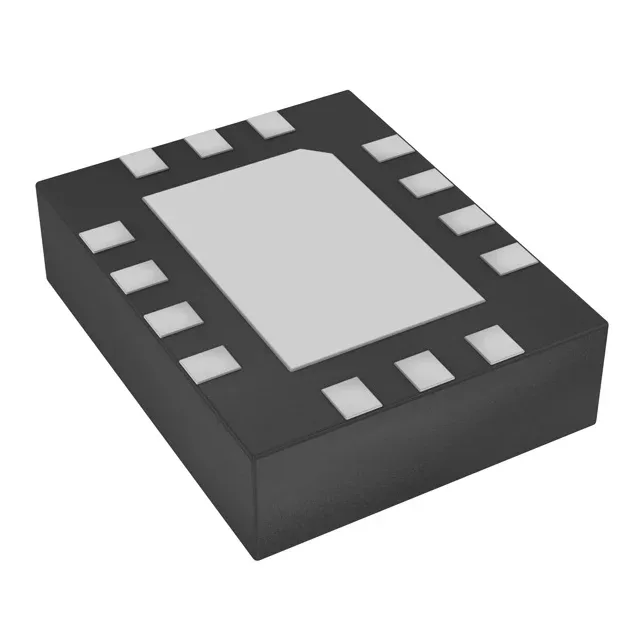
Microchip DSC2011, XO (Standard), MEMS base resonator, dual CMOS outputs, 2.25V–3.6V supply, -55°C to 125°C, 14-VFQFN exposed pad
| Parameter | Value |
|---|---|
| Type | XO (Standard) |
| Series | DSC2011 |
| Supply voltage | 2.25V ~ 3.6V |
| Current - supply | 32mA (Typ) |
| Current - supply (Disable) | 23 mA |
| Frequency stability | ±25ppm |
| Frequency - output 1 | 24MHz, 25MHz, 27MHz, 48MHz, 50MHz, 54MHz |
| Frequency - output 2 | 24MHz, 27MHz, 50MHz, 54MHz, 125MHz |
| Operating temperature | -55°C~125°C |
| Height | 0.035\" (0.90mm) |
| Size (Dimension) | 0.126\" L x 0.098\" W (3.20mm x 2.50mm) |
| Output | CMOS |
| Package | Tube |
| Function | Enable/Disable |
| Base resonator | MEMS |
| Case | 14-VFQFN Exposed Pad |
Output 1 can be set to 24, 25, 27, 48, 50, or 54 MHz; Output 2 to 24, 27, 50, 54, or 125 MHz. That covers a microcontroller core clock and a USB or Ethernet PHY reference from one package.
Buyers need to know authorized distributors and current availability to place an order.
Pricing influences budget planning and supplier comparison for sourcing teams.
Design engineers must confirm that this part provides the exact frequencies required for their application.
Lifecycle status determines long-term availability and risk of redesign for maintenance and procurement.
Datasheet provides all critical electrical and mechanical specifications for validation.
Engineers need pinout information for PCB layout and to ensure proper connection with enable/disable function.