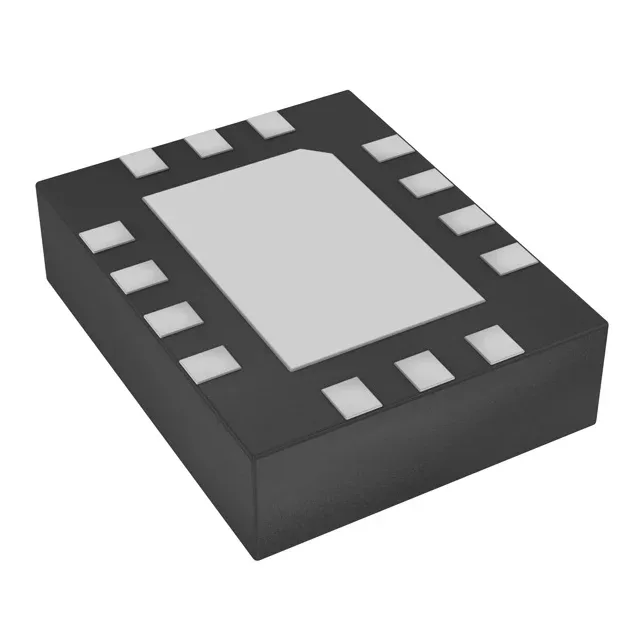
Microchip Technology DSC2011FI1-F0033T — Crystals & Oscillators

DSC2011FI1-F0033T MEMS XO – Dual Output 24 MHz / 8 MHz, CMOS

MPNDSC2011FI1-F0033T
Active

Microchip DSC2011FI1-F0033T, DSC2011 series, XO (Standard) MEMS oscillator, dual CMOS outputs: 24 MHz and 8 MHz, ±50 ppm stability, 2.25 V–3.6 V supply, -40°C to +85°C, 14-VFQFN exposed pad package.

Sourced new & surplus through independent channelsAuthenticity-screened · ESD-safe packingListing updated Aug 2026

Specifications

DSC2011FI1-F0033T specifications
ParameterValue
TypeXO (Standard)
SeriesDSC2011
Voltage2.25V ~ 3.6V
Current - supply32mA (Typ)
Current - supply (Disable)23 mA
Frequency stability±50ppm
Frequency - output 124MHz
Frequency - output 28MHz
Operating temperature-40°C~85°C
Height0.035\" (0.90mm)
Size (Dimension)0.126\" L x 0.098\" W (3.20mm x 2.50mm)
OutputCMOS
PackageTape & Reel (TR)
FunctionEnable/Disable
Base resonatorMEMS
Case14-VFQFN Exposed Pad

Product details

Dual-frequency MEMS oscillator for mixed-clock domains

The DSC2011FI1-F0033T is a MEMS-based XO that outputs two independent CMOS clocks — 24 MHz on output 1 and 8 MHz on output 2 — from a single 14-VFQFN package. This eliminates a second oscillator when a system needs, for example, a main MCU clock and a lower-speed peripheral or RTC reference. The wide input also absorbs rail ripple better than a fixed-voltage XO.

Active supply current is 32 mA typical — this is the total for both outputs running. Budget the 32 mA into the 2.25–3.6 V rail's load calculation; the disable-mode current (23 mA) is still relatively high for a deep-sleep state, so consider an external load switch if sub-mA standby is required.

Package, footprint, and layout note

The 14-VFQFN with exposed pad measures 3.20 mm x 2.50 mm, height 0.90 mm.

Frequently asked questions

What frequencies does the DSC2011FI1-F0033T output?

Output 1 is 24 MHz; output 2 is 8 MHz. Both are CMOS-level outputs. The dual-frequency feature means one device replaces two separate oscillators when these two clock rates are needed.

What is the frequency stability of DSC2011FI1-F0033T?

This is adequate for most UART, SPI, and general-purpose digital clocking. For precision timing (e.g., Ethernet PHY reference), a tighter stability oscillator would be needed.

Does DSC2011FI1-F0033T have an enable/disable function?

Yes. The Enable/Disable pin gates both outputs.