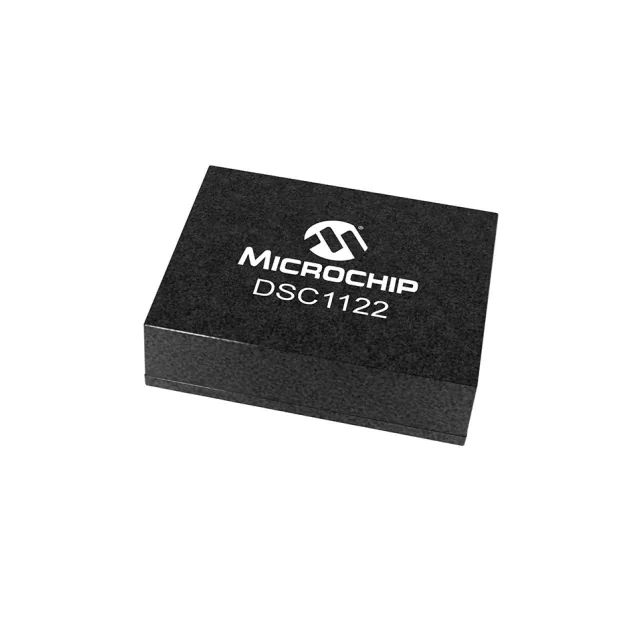
Microchip Technology DSC1524MA2A-20M00000T — Crystals & Oscillators

DSC1524MA2A-20M00000T MEMS XO 20 MHz 1.8V LVCMOS Active

MPNDSC1524MA2A-20M00000T
Active

Microchip Technology DSC1524MA2A-20M00000T, XO (Standard) 20 MHz, LVCMOS output, 1.8V supply, ±25ppm stability, -40°C to 125°C, 4-VFLGA package, MEMS resonator, Enable/Disable function.

Sourced new & surplus through independent channelsAuthenticity-screened · ESD-safe packingListing updated Aug 2026

Specifications

DSC1524MA2A-20M00000T specifications
ParameterValue
TypeXO (Standard)
SeriesDSC152X
MountingSurface Mount
Voltage1.8V
Current - supply7.5mA
Frequency20 MHz
Frequency stability±25ppm
Operating temperature-40°C ~ 125°C
Size (Dimension)0.079\" L x 0.063\" W (2.00mm x 1.60mm)
Height - seated0.035\" (0.89mm)
OutputLVCMOS
PackageTape & Reel (TR)
FunctionEnable/Disable
Base resonatorMEMS
Case4-VFLGA

Product details

20 MHz MEMS XO for 1.8V clock trees

It delivers an LVCMOS output at 1.8V supply, drawing a maximum of 7.5 mA.

Enable/Disable control and package footprint

The 4-VFLGA package measures 2.00 mm x 1.60 mm with a seated height of 0.89 mm — a compact footprint that suits space-constrained designs like IoT modules or portable instrumentation.

Frequently asked questions

How can I order DSC1524MA2A-20M00000T or check availability?

This part is Active and available through independent distribution. Submit an RFQ with your target quantity; we confirm current pricing and lead time at quote. No stock-holding claim is made — each order is sourced per your BOM line.

What is the exact frequency and supply voltage of DSC1524MA2A-20M00000T?

The oscillator outputs 20 MHz and operates from a 1.8V supply rail.

Is DSC1524MA2A-20M00000T compatible with 1.8V logic?

Yes. The LVCMOS output is specified for 1.8V supply, so it interfaces directly with 1.8V-logic MCUs, FPGAs, and SoCs without a level translator.

Does DSC1524MA2A-20M00000T have an enable/disable function?

Yes. The Enable/Disable pin lets you tri-state the output for power-down or test modes while keeping the supply active.

What is the difference between MEMS and quartz oscillators?

MEMS oscillators use a silicon micro-electromechanical resonator instead of a quartz crystal. They typically offer better shock and vibration tolerance, faster start-up, and smaller package sizes — the DSC1524MA2A-20M00000T's 2.00 mm x 1.60 mm footprint is an example. Quartz oscillators may still be preferred for ultra-tight stability (<±10 ppm) or specific phase-noise requirements, but the ±25 ppm stability here covers most general-purpose clocking needs.