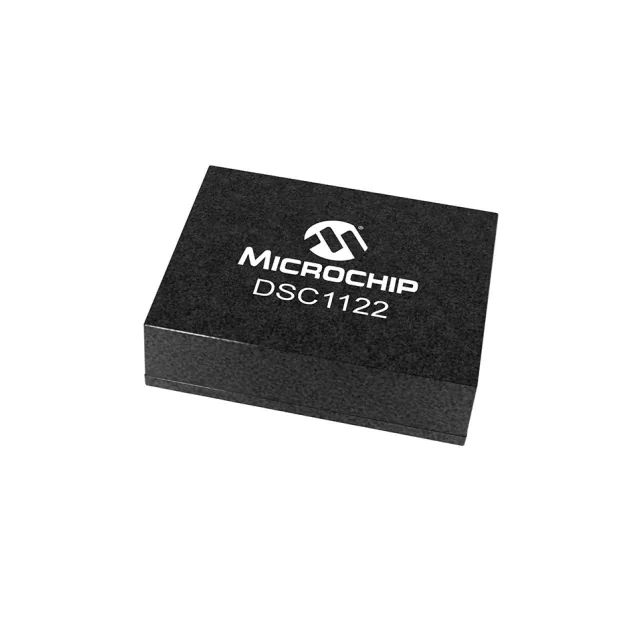
This eliminates the quartz cold-start settling time and reduces sensitivity to vibration and shock. It is a standard XO (oscillator) with LVCMOS output, so it drops into a 4-pin oscillator footprint without external load capacitors or a feedback resistor. The 4 MHz frequency is common for MCU clock inputs, USB low-speed, and CAN controllers — the MEMS startup is typically under 5 ms, which can shave milliseconds off the system boot sequence compared to a quartz oscillator.
Frequency stability over the industrial temperature band
Rated ±20 ppm across -40 to 85°C — that is the total frequency deviation including initial tolerance, temperature drift, and aging. For a 4 MHz carrier, ±20 ppm equals ±80 Hz maximum drift, which keeps the clock within the tolerance of most UART and SPI peripherals.
In active mode the maximum supply current is 7.5 mA at 4 MHz and 1.8V — the MEMS architecture keeps the active draw comparable to a quartz oscillator while offering faster startup and better shock immunity.
Package and layout — 4-VDFN with exposed pad
The pad also provides a low-inductance ground return for the output, which helps maintain clean LVCMOS edges into the load.