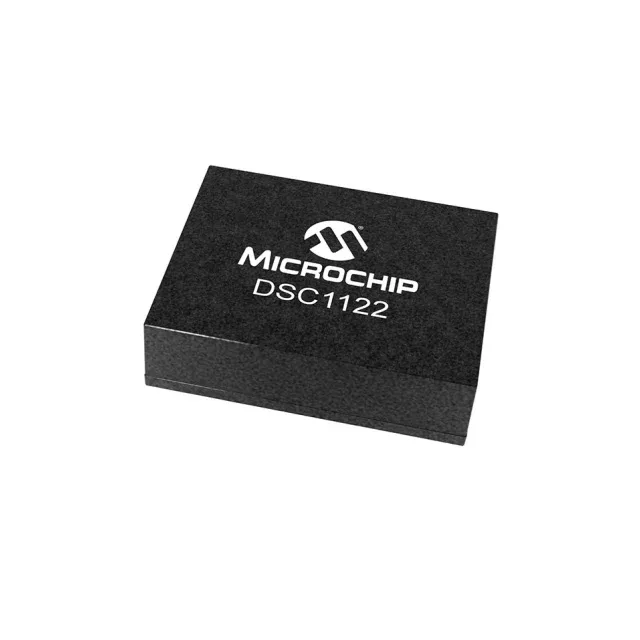
Microchip Technology DSC1502AI3A-156M2500T — Crystals & Oscillators

DSC1502AI3A-156M2500T MEMS XO – 156.25 MHz, LVCMOS

MPNDSC1502AI3A-156M2500T
Active

Microchip DSC1502AI3A-156M2500T, DSC150X series, XO (Standard) MEMS oscillator, 156.25 MHz, LVCMOS output, ±20 ppm stability, 2.5 V to 3.3 V supply, -40 to +85 °C, 4-VDFN exposed pad.

Sourced new & surplus through independent channelsAuthenticity-screened · ESD-safe packingListing updated Aug 2026

Specifications

DSC1502AI3A-156M2500T specifications
ParameterValue
TypeXO (Standard)
SeriesDSC150X
MountingSurface Mount
Voltage2.5V ~ 3.3V
Current - supply7.5mA
Current - supply (Disable)1.8µA (Typ)
Frequency156.25 MHz
Frequency stability±20ppm
Operating temperature-40°C~85°C
Size (Dimension)0.276\" L x 0.197\" W (7.00mm x 5.00mm)
Height - seated0.035\" (0.90mm)
OutputLVCMOS
PackageTape & Reel (TR)
FunctionStandby (Power Down)
Base resonatorMEMS
Case4-VDFN Exposed Pad

Product details

156.25 MHz MEMS XO – why the silicon resonator matters

The DSC1502AI3A-156M2500T is a MEMS-based XO (Standard) that outputs a fixed 156.25 MHz LVCMOS clock — the common reference for 1Gb/10Gb Ethernet PHYs, SerDes framers, and FPGA transceiver banks. Unlike a quartz crystal oscillator, the MEMS resonator is immune to vibration-induced frequency jumps and start-up reliability issues tied to load-capacitance mismatch. Supply voltage spans 2.5 V to 3.3 V, so the same part serves 3.3 V and 2.5 V clock domains without a separate level translator.

7.5 mA at 156.25 MHz – power budget fit

Maximum supply current is 7.5 mA at 156.25 MHz. For comparison, a quartz-based oscillator at this frequency typically draws 15–25 mA. The MEMS core cuts the clock power budget roughly in half, which matters when the oscillator runs continuously and the system has a tight thermal or battery envelope. This is adequate for most Ethernet and general-purpose clocking; precision timing applications (e.g., IEEE 1588 grandmaster) would require a tighter TCXO or OCXO.

Product status is Active per Microchip. The 4-VDFN exposed-pad package (7.0 mm × 5.0 mm, 0.90 mm seated height) is a standard MEMS oscillator footprint.

Frequently asked questions

How does the DSC1502AI3A-156M2500T compare to a standard quartz crystal oscillator?

The key difference is the MEMS resonator vs a quartz blank. MEMS oscillators have no start-up reliability issues tied to load-capacitance matching, are more resistant to vibration and shock, and typically draw lower supply current — 7.5 mA max at 156.25 MHz vs 15–25 mA for a quartz oscillator at the same frequency. The trade-off is that MEMS oscillators have slightly higher phase noise close to carrier than a good quartz oscillator, though for Ethernet and SerDes clocking the difference is not meaningful.

What is the typical power consumption of the DSC1502AI3A-156M2500T?

In standby (power-down) mode the disable current drops to 1.8 µA typical. Actual power consumption depends on the output load capacitance and the supply voltage — at 3.3 V and a 15 pF load, typical current is lower than the max rating.