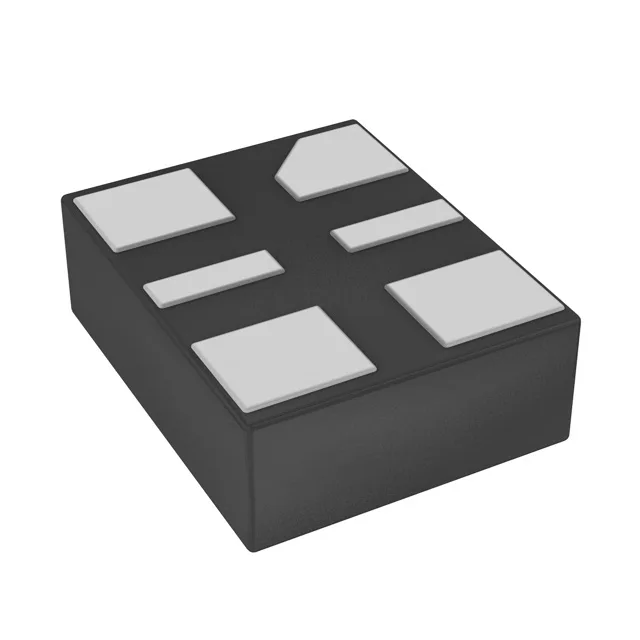
Microchip Technology DSC1124DE1-125.0000 — Crystals & Oscillators

DSC1124DE1-125.0000 MEMS XO, 125 MHz HCSL, 2.5x2.0mm

MPNDSC1124DE1-125.0000
Active

Microchip Technology DSC1124 series, XO (Standard) MEMS oscillator, 125 MHz, HCSL output, 2.25V~3.6V supply, ±50ppm stability, 6-SMD No Lead 2.50mm x 2.00mm, Enable/Disable function.

Independent supplier — new & surplus stockAuthenticity-screened · ESD-safe packingListing updated Aug 2026

Specifications

DSC1124DE1-125.0000 specifications
ParameterValue
TypeXO (Standard)
SeriesDSC1124
MountingSurface Mount
Supply voltage2.25V ~ 3.6V
Current - supply42mA
Current - supply (Disable)22mA
Frequency125 MHz
Frequency stability±50ppm
Operating temperature-20°C~70°C
Size (Dimension)0.098\" L x 0.079\" W (2.50mm x 2.00mm)
Height - seated0.035\" (0.90mm)
OutputHCSL
PackageTube
FunctionEnable/Disable
Base resonatorMEMS
Case6-SMD, No Lead

Product details

Frequency stability and temperature envelope

The DSC1124DE1-125.0000: Max supply current is 42 mA when active, dropping to 22 mA with the output disabled — the disable current is still non-trivial, so if you are designing a battery-powered device that sleeps most of the time, plan a load switch ahead of the oscillator supply.

Package and board integration

Surface-mount only — no through-hole variant in this series, so it is a reflow-only part. The no-lead construction keeps the parasitic inductance low, which helps maintain signal integrity on the 125 MHz HCSL edge rates.

Frequently asked questions

What is the output type and frequency of DSC1124DE1-125.0000?

The output is HCSL (High-Speed Current Steering Logic) at a fixed 125 MHz. HCSL is a differential standard commonly used for PCIe reference clocks, requiring a 50-ohm termination to ground on each output leg.

What supply voltage does DSC1124DE1-125.0000 need?

No external regulator is needed if your board already has one of these rails.

Is there a pin-compatible alternative to DSC1124DE1-125.0000?

The DSC1124 series shares the same footprint and pinout across frequencies, so a different frequency in the same series would fit the same PCB layout, but the output type and supply range must match.