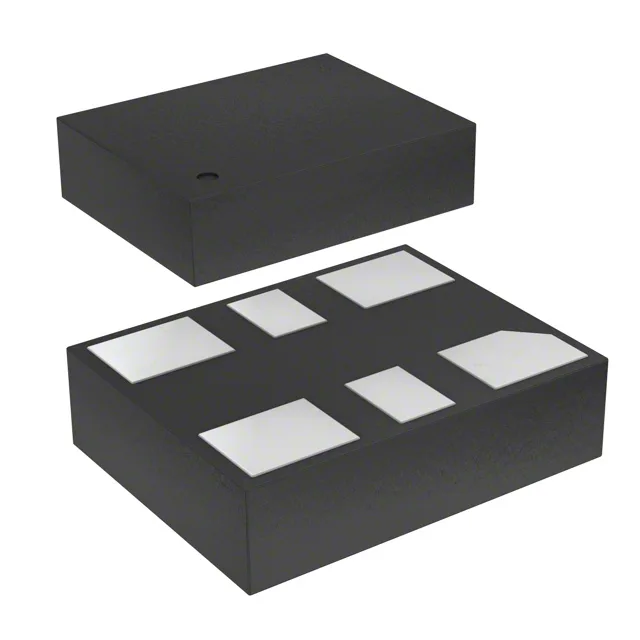
Microchip Technology DSC1124CI2-133.3300 — Crystals & Oscillators

DSC1124CI2-133.3300 – Microchip MEMS XO, 133.33 MHz, HCSL

MPNDSC1124CI2-133.3300
Active

Microchip DSC1124 series MEMS XO (Standard), 133.33 MHz, HCSL output, ±25 ppm frequency stability, 6-VDFN package, -40°C to 85°C, Enable/Disable function

$13.5200Ref. price · indicative, final on quote
Sourced new & surplus through independent channelsAuthenticity-screened · ESD-safe packingListing updated Aug 2026

Specifications

DSC1124CI2-133.3300 specifications
ParameterValue
TypeXO (Standard)
SeriesDSC1124
MountingSurface Mount
Voltage2.25V ~ 3.6V
Current - supply42mA
Current - supply (Disable)22mA
Frequency133.33 MHz
Frequency stability±25ppm
Operating temperature-40°C ~ 85°C
Size (Dimension)0.126\" L x 0.098\" W (3.20mm x 2.50mm)
Height - seated0.035\" (0.90mm)
OutputHCSL
PackageTube
FunctionEnable/Disable
Base resonatorMEMS
Case6-VDFN

Product details

133.33 MHz HCSL clock source for high-speed interfaces

The DSC1124CI2-133.3300 is a MEMS-based XO (Standard) delivering a 133.33 MHz HCSL output — a common reference clock for PCIe Gen1/2/3, Ethernet PHYs, and FPGA transceivers that require a differential, low-jitter clock with a controlled swing. HCSL (High-Speed Current Steering Logic) swings 700-900 mV peak-to-peak into a 50-Ω termination to Vcc-2V, which means the output amplitude is set by the termination, not the supply — the same board layout works across the full 2.25V to 3.6V supply range.

±25 ppm stability over industrial temperature

The 6-VDFN package (3.20mm x 2.50mm, 0.90mm seated height) is a standard MEMS oscillator footprint, compatible with common quartz XO layouts — verify the pad pitch against your existing land pattern before committing.

Frequently asked questions

What is the frequency stability of the DSC1124CI2-133.3300?

That stability includes initial tolerance, temperature drift, and supply variation — no external trim capacitor needed.

Does the DSC1124CI2-133.3300 have an enable/disable function?

Yes — the Enable/Disable function is listed. When disabled, the output goes to high-impedance and the supply current drops to 22 mA max, allowing the clock to be gated without an external buffer.

Can the DSC1124CI2-133.3300 replace a failed quartz oscillator on my board?

If the original was a 133.33 MHz HCSL oscillator in a 6-VDFN footprint with a 2.25V to 3.6V supply, this MEMS part is a drop-in replacement. The MEMS resonator is less sensitive to vibration and has no crystal aging drift — but confirm the Enable/Disable logic polarity and the output termination match your design.