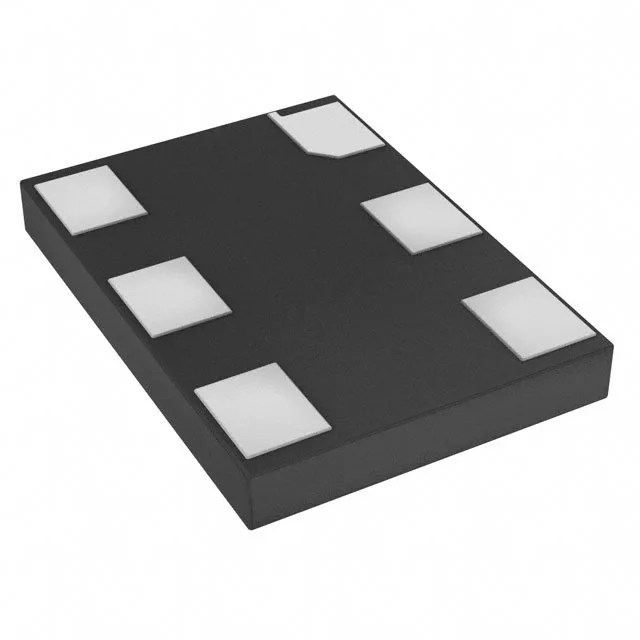
Microchip Technology DSC1123NI2-125.0000 — Crystals & Oscillators

DSC1123NI2-125.0000 – 125 MHz LVDS MEMS XO, AEC-Q100, Active

MPNDSC1123NI2-125.0000
Active

Microchip Technology DSC1123NI2-125.0000, XO (Standard) MEMS oscillator, 125 MHz LVDS output, ±25ppm stability, AEC-Q100, -40°C~85°C, 6-SMD no-lead package.

Independent supplier — new & surplus stockAuthenticity-screened · ESD-safe packingListing updated Aug 2026

Specifications

DSC1123NI2-125.0000 specifications
ParameterValue
TypeXO (Standard)
SeriesDSC1123
MountingSurface Mount
Supply voltage2.25V ~ 3.63V
Current - supply32mA
Current - supply (Disable)22mA
Frequency125 MHz
Frequency stability±25ppm
Operating temperature-40°C~85°C
Size (Dimension)0.276\" L x 0.197\" W (7.00mm x 5.00mm)
Height - seated0.035\" (0.90mm)
OutputLVDS
PackageTube
RatingsAEC-Q100
FunctionEnable/Disable
Base resonatorMEMS
Case6-SMD, No Lead

Product details

The DSC1123NI2-125.0000: This is a 125 MHz LVDS output MEMS-based XO (Standard) from Microchip's DSC1123 series, rated AEC-Q100 for automotive applications. Supply voltage spans 2.25V to 3.63V, so it runs from a 2.5V or 3.3V rail without an extra LDO.

Enable/Disable function and current draw

That 22mA disable current is still present because the LVDS output buffer bias remains powered; for a true zero-power sleep, a load switch on the Vdd rail is needed.

Housed in a 6-SMD no-lead package measuring 7.00mm x 5.00mm with a seated height of 0.90mm — a standard 7x5 mm oscillator footprint that matches many quartz XO pads.

Availability confirmed at RFQ.

Frequently asked questions

Is DSC1123NI2-125.0000 AEC-Q100 certified?

Yes, the Ratings field lists AEC-Q100 qualification. That means it has passed automotive-grade stress tests (temperature cycling, ESD, latch-up) and is suitable for under-hood or cabin electronics where the ambient temperature stays within -40°C to 85°C.

What is the output type of DSC1123NI2-125.0000?

LVDS — low-voltage differential signaling. The 125 MHz LVDS output is intended for high-speed clock distribution to FPGAs, SerDes transceivers, Ethernet PHYs, and other differential-clock inputs.