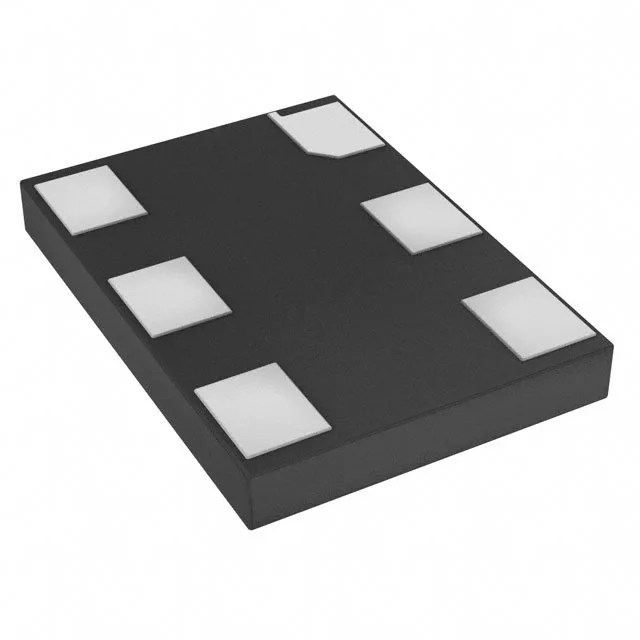
Microchip Technology DSC1123NI1-125.0000T — Crystals & Oscillators

DSC1123NI1-125.0000T – Microchip 125 MHz LVDS MEMS

MPNDSC1123NI1-125.0000T
Active

Microchip Technology DSC1123NI1-125.0000T, XO (Standard) 125 MHz LVDS oscillator, MEMS base resonator, AEC-Q100 rated, 2.25V–3.63V supply, -40°C to 85°C, 6-SMD package.

$6.1220Ref. price · indicative, final on quote
Independent supplier — new & surplus stockAuthenticity-screened · ESD-safe packingListing updated Aug 2026

Specifications

DSC1123NI1-125.0000T specifications
ParameterValue
TypeXO (Standard)
SeriesDSC1123
MountingSurface Mount
Supply voltage2.25V ~ 3.63V
Current - supply32mA
Current - supply (Disable)22mA
Frequency125 MHz
Frequency stability±50ppm
Operating temperature-40°C~85°C
Size (Dimension)0.276\" L x 0.197\" W (7.00mm x 5.00mm)
Height - seated0.035\" (0.90mm)
OutputLVDS
PackageTape & Reel (TR)
RatingsAEC-Q100
FunctionEnable/Disable
Base resonatorMEMS
Case6-SMD, No Lead

Product details

It delivers a standard XO timing reference with LVDS output, meaning the differential signal stays clean over longer PCB traces and through noisy environments.

Supply voltage tolerance simplifies rail selection

Operating from 2.25V to 3.63V, the oscillator works on 2.5V or 3.3V rails without a dedicated LDO. The wide range also provides margin during supply transients — a 3.3V rail that dips to 2.5V during a load step keeps the clock running.

The 6-SMD, No Lead package measures 7.00mm x 5.00mm with a seated height of 0.90mm — a standard 7050 footprint that matches many quartz oscillators, so a board layout designed for a 7050 crystal oscillator can often accept this MEMS part without a respin.

Frequently asked questions

Is the DSC1123NI1-125.0000T suitable for automotive applications?

This makes it suitable for under-hood and cabin electronics where thermal cycling and vibration are present.

Does the DSC1123NI1-125.0000T have an enable/disable function?

Yes, the Enable/Disable pin lets you gate the output. When disabled, the supply current drops to 22 mA max — useful for power management in battery-backed or intermittently clocked subsystems.