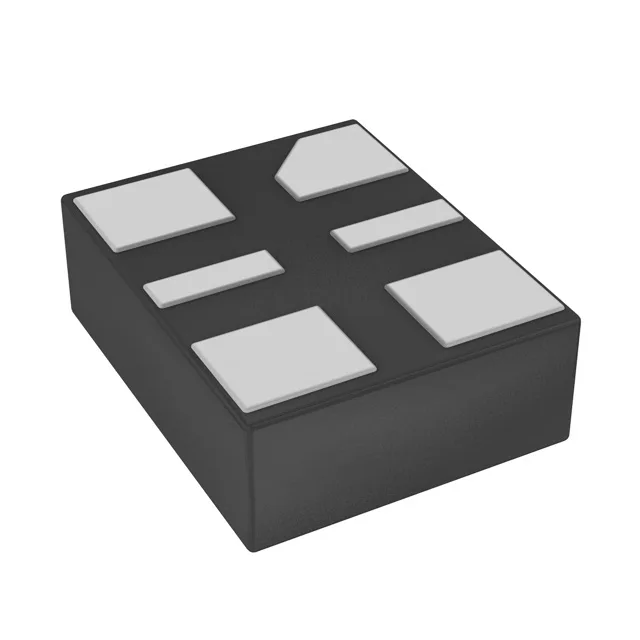
Microchip Technology DSC1123DL5-150.0000 — Crystals & Oscillators

DSC1123DL5-150.0000 – 150 MHz LVDS MEMS Oscillator, ±10 ppm

MPNDSC1123DL5-150.0000
Active

Microchip DSC1123 series, XO (Standard), 150 MHz LVDS output, ±10 ppm stability, 2.25V–3.63V supply, -40°C to 105°C, 6-SMD, no lead, surface mount.

$5.5100Ref. price · indicative, final on quote
Independent supplier — new & surplus stockAuthenticity-screened · ESD-safe packingListing updated Aug 2026

Specifications

DSC1123DL5-150.0000 specifications
ParameterValue
TypeXO (Standard)
SeriesDSC1123
MountingSurface Mount
Supply voltage2.25V ~ 3.63V
Current - supply22mA
Frequency150 MHz
Frequency stability±10ppm
Operating temperature-40°C~105°C
Size (Dimension)0.098\" L x 0.079\" W (2.50mm x 2.00mm)
Height - seated0.035\" (0.90mm)
OutputLVDS
PackageTube
FunctionEnable/Disable
Base resonatorMEMS
Case6-SMD, No Lead

Product details

150 MHz LVDS clock source with MEMS resonator

Supply voltage spans 2.25V to 3.63V, so the same BOM line works on a 2.5V or 3.3V rail without a separate regulator.

Housed in a 6-SMD, no-lead package measuring 2.50mm x 2.00mm with a seated height of 0.90mm — a compact footprint that fits dense timing trees on multi-layer boards. The surface-mount package requires standard reflow soldering; the small body means the decoupling capacitor should sit within 2 mm of the supply pin to keep the LVDS edge clean. Maximum supply current is 22 mA, so the thermal load on the PCB is minimal even at 105°C ambient.

Frequently asked questions

Is DSC1123DL5-150.0000 compatible with a 3.3V supply?

Yes. The supply voltage range is 2.25V to 3.63V, so both 2.5V and 3.3V rails are within spec. The LVDS output common-mode voltage tracks the supply, but the differential swing stays within the receiver's input range across the full Vdd window.

What is the closest pin-compatible alternative to DSC1123DL5-150.0000?

Within the DSC1123 series, any part with the same 6-SMD package and pinout is a drop-in replacement at a different frequency or stability grade. For a different output type (e.g., LVPECL or HCSL), the pinout changes — confirm the second-source order code against the datasheet footprint before committing.