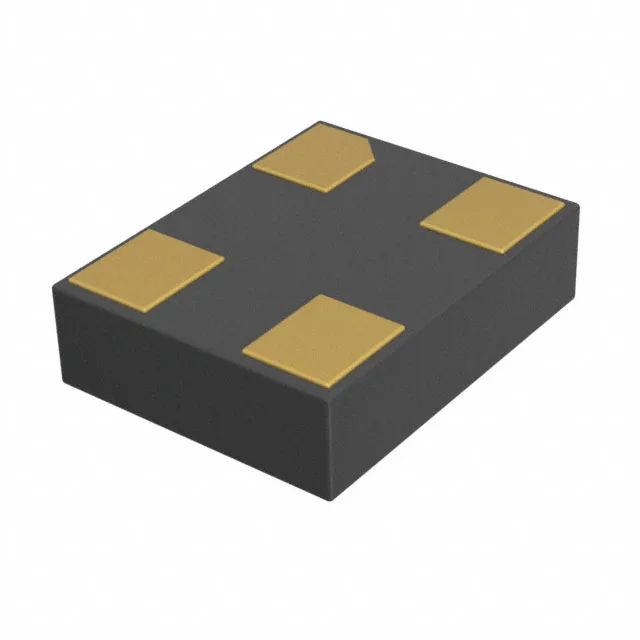
Microchip Technology DSC1123DL1-100.0000T — Crystals & Oscillators

DSC1123DL1-100.0000T – 100 MHz LVDS MEMS Oscillator

MPNDSC1123DL1-100.0000T
Active

Microchip DSC1123 series, XO (Standard), 100 MHz LVDS output, MEMS resonator, 6-VDFN package, 2.25V to 3.63V supply, -40°C to 105°C operation

Sourced new & surplus through independent channelsAuthenticity-screened · ESD-safe packingListing updated Aug 2026

Specifications

DSC1123DL1-100.0000T specifications
ParameterValue
TypeXO (Standard)
SeriesDSC1123
MountingSurface Mount
Voltage2.25V ~ 3.63V
Current - supply32mA
Current - supply (Disable)22mA
Frequency100 MHz
Frequency stability±50ppm
Operating temperature-40°C ~ 105°C
Size (Dimension)0.098\" L x 0.079\" W (2.50mm x 2.00mm)
Height - seated0.035\" (0.90mm)
OutputLVDS
PackageTape & Reel (TR)
FunctionEnable/Disable
Base resonatorMEMS
Case6-VDFN

Product details

100 MHz LVDS clock — MEMS, not quartz

The MEMS die is sealed in a 6-VDFN package measuring 2.50 mm x 2.00 mm, which saves board area compared to a can-style quartz oscillator at the same frequency. Output is LVDS — the differential pair delivers clean edges into 100-ohm terminated traces, making this a natural fit for clocking a high-speed ADC, FPGA, or SerDes transceiver where single-ended CMOS would pick up noise.

That stability is specified without the temperature-compensation circuitry a quartz TCXO would need — the MEMS resonator's frequency-vs-temperature curve is inherently flatter. The 105°C ceiling puts it in the industrial-plus bracket: outdoor base stations, motor drives with internal air temperatures above 85°C, and engine-bay electronics that see under-hood heat soak. A commercial-grade 0-70°C oscillator would drift outside the ±50 ppm window above 70°C.

Supply voltage spans 2.25V to 3.63V — the same part works on a 2.5V or 3.3V rail without a separate LDO.

Frequently asked questions

Can DSC1123DL1-100.0000T replace a 100 MHz LVDS oscillator from SiTime?

Both are 100 MHz LVDS MEMS oscillators in similar 6-pin DFN packages, but pinout and enable logic should be verified against the respective datasheets. The DSC1123 uses a standard Enable/Disable function; SiTime parts may use a different enable polarity or tri-state output. Confirm the footprint and control logic before substituting.