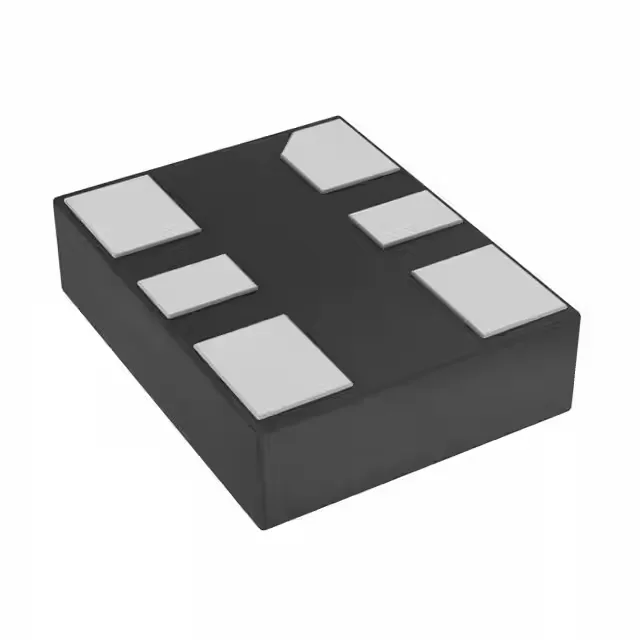
Microchip Technology DSC1123CI5-100.0000T — Crystals & Oscillators

DSC1123CI5-100.0000T MEMS XO 100 MHz LVDS ±10 ppm -

MPNDSC1123CI5-100.0000T
Active

Microchip Technology DSC1123 series MEMS-based XO (Standard), 100 MHz LVDS output, ±10 ppm frequency stability, 2.25V–3.63V supply, 6-SMD package, -40°C to 85°C operating range.

$4.9300Ref. price · indicative, final on quote
Sourced new & surplus through independent channelsAuthenticity-screened · ESD-safe packingListing updated Aug 2026

Specifications

DSC1123CI5-100.0000T specifications
ParameterValue
TypeXO (Standard)
SeriesDSC1123
MountingSurface Mount
Voltage2.25V ~ 3.63V
Current - supply32mA
Current - supply (Disable)22mA
Frequency100 MHz
Frequency stability±10ppm
Operating temperature-40°C~85°C
Size (Dimension)0.126\" L x 0.098\" W (3.20mm x 2.50mm)
Height - seated0.035\" (0.90mm)
OutputLVDS
PackageTape & Reel (TR)
FunctionEnable/Disable
Base resonatorMEMS
Case6-SMD, No Lead

Product details

This eliminates the quartz cold-start frequency drift and reduces sensitivity to board-level vibration — the MEMS die is bonded directly to the package substrate, so the oscillator starts at its rated frequency without the warm-up transient typical of quartz.

100 MHz LVDS — signal integrity and load budgeting

LVDS output at 100 MHz delivers a differential swing of roughly 350 mV into a 100-Ω termination — the low swing reduces EMI and keeps the edge rate controlled for point-to-point clock distribution on a 4-layer or 6-layer PCB.

Package and supply — board-fit checklist

6-SMD no-lead package, 3.20 mm × 2.50 mm body, 0.90 mm seated height. The 2.25 V to 3.63 V supply range covers 2.5 V and 3.3 V rails without an external regulator — the internal LDO regulates the MEMS core from the input rail.

Frequently asked questions

Can the DSC1123CI5-100.0000T replace a quartz oscillator in an existing design?

Yes, if the existing quartz XO is a 100 MHz LVDS output in a 6-SMD footprint with a 2.25 V to 3.63 V supply. The MEMS base resonator eliminates the quartz warm-up drift and is less sensitive to vibration, but the pinout and output type must match — confirm the existing oscillator's function pin (enable/disable) assignment against the DSC1123 datasheet before committing.