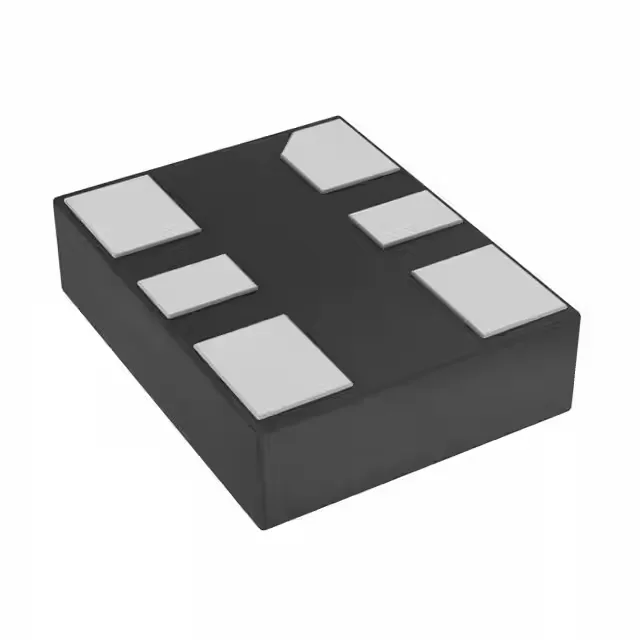
Microchip Technology DSC1123CI2-062.5000T — Crystals & Oscillators

DSC1123CI2-062.5000T MEMS Oscillator 62.5 MHz LVDS AEC-Q100

MPNDSC1123CI2-062.5000T
Active

Microchip DSC1123 series MEMS XO (Standard), 62.5 MHz LVDS output, ±25 ppm frequency stability, 2.25V–3.63V supply, -40°C to 85°C, AEC-Q100 qualified, 6-SMD no-lead package, tape & reel.

Independent supplier — new & surplus stockAuthenticity-screened · ESD-safe packingListing updated Aug 2026

Specifications

DSC1123CI2-062.5000T specifications
ParameterValue
TypeXO (Standard)
SeriesDSC1123
MountingSurface Mount
Supply voltage2.25V ~ 3.63V
Current - supply32mA
Current - supply (Disable)22mA
Frequency62.5 MHz
Frequency stability±25ppm
Operating temperature-40°C~85°C
Size (Dimension)0.126\" L x 0.098\" W (3.20mm x 2.50mm)
Height - seated0.035\" (0.90mm)
OutputLVDS
PackageTape & Reel (TR)
RatingsAEC-Q100
FunctionEnable/Disable
Base resonatorMEMS
Case6-SMD, No Lead

Product details

62.5 MHz LVDS clock for automotive and industrial boards

The DSC1123CI2-062.5000T: The LVDS output provides low-jitter differential signalling for noise-sensitive clock trees in automotive ECUs, ADAS cameras, and industrial motor drives — the 32 mA max supply current reflects the LVDS driver's constant-current draw, not a load-dependent figure.

AEC-Q100 qualification and supply voltage flexibility

AEC-Q100 qualification means this oscillator passed automotive-grade reliability stress and temperature cycling tests. The Enable/Disable function lets the system shut down the oscillator output without removing power, dropping the supply current to 22 mA max — useful for power-cycled sensor nodes or CAN bus wake-up circuits.

Frequently asked questions

Is DSC1123CI2-062.5000T AEC-Q100 qualified?

Yes, it carries AEC-Q100 rating, meaning it has passed automotive-grade IC qualification including temperature cycling and reliability stress. It is suitable for automotive applications.

What is the output type of DSC1123CI2-062.5000T?

The output is LVDS (Low-Voltage Differential Signalling), providing a differential clock signal with low electromagnetic interference and high noise immunity for high-speed digital interfaces.