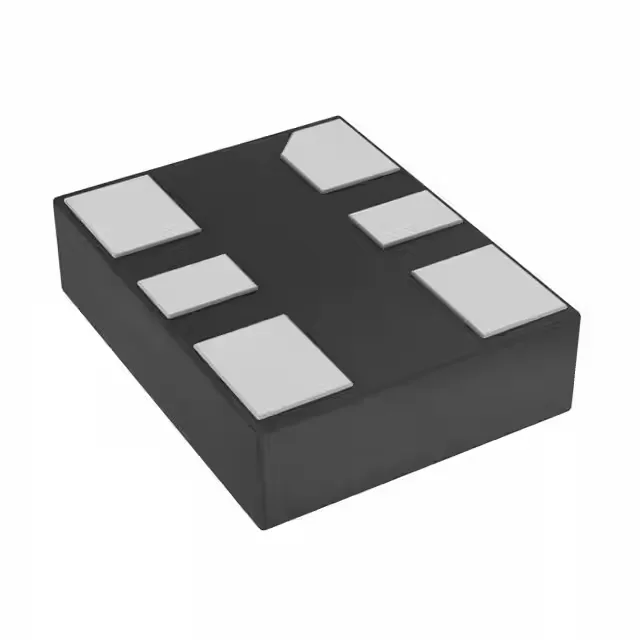
Microchip Technology DSC1123CE1-150.0000 — Crystals & Oscillators

DSC1123CE1-150.0000 150 MHz LVDS MEMS Oscillator

MPNDSC1123CE1-150.0000
Active

Microchip DSC1123CE1-150.0000, XO (Standard), LVDS output, 150 MHz, MEMS resonator, 6-SMD 3.20mm x 2.50mm, ±50 ppm stability, 2.25V–3.63V supply.

$2.7600Ref. price · indicative, final on quote
Sourced new & surplus through independent channelsAuthenticity-screened · ESD-safe packingListing updated Aug 2026

Specifications

DSC1123CE1-150.0000 specifications
ParameterValue
TypeXO (Standard)
SeriesDSC1123
MountingSurface Mount
Voltage2.25V ~ 3.63V
Current - supply22mA
Frequency150 MHz
Frequency stability±50ppm
Operating temperature-20°C~70°C
Size (Dimension)0.126\" L x 0.098\" W (3.20mm x 2.50mm)
Height - seated0.035\" (0.90mm)
OutputLVDS
PackageTube
FunctionEnable/Disable
Base resonatorMEMS
Case6-SMD, No Lead

Product details

150 MHz LVDS clock source with MEMS resonator

The MEMS base gives it better resistance to vibration and mechanical shock compared to a quartz oscillator, and it starts up faster — typically under 5 ms — which matters for applications that cycle power frequently.

Package footprint and supply range

The 6-SMD no-lead package measures 3.20 mm x 2.50 mm with a seated height of 0.90 mm. That is a standard 3.2x2.5 mm oscillator footprint — compatible with many quartz oscillators of the same size, so a PCB laid out for a quartz part can often take this MEMS part without a layout change. Supply voltage range is 2.25 V to 3.63 V, covering 2.5 V and 3.3 V rails. Maximum supply current is 22 mA, which is typical for a 150 MHz LVDS output — the LVDS current-mode driver draws a constant current regardless of frequency, so the power budget is predictable.

Temperature grade and frequency stability

It suits office equipment, networking gear, test instruments, and consumer electronics. For outdoor or under-hood use, a wider-temperature variant of the DSC1123 family would be needed. That is the standard commercial stability grade — adequate for most Ethernet, PCIe, and SATA reference clocks. If the application requires tighter holdover or Stratum 3 compliance, a ±25 ppm or TCXO would be the next step up.

Frequently asked questions

Can DSC1123CE1-150.0000 replace a standard quartz oscillator of the same frequency?

The MEMS resonator offers better shock/vibration immunity and faster startup than quartz, but the output type must be LVDS — it will not drive a CMOS or HCSL input without a level translator.

Does DSC1123CE1-150.0000 have an enable/disable pin?

Yes, the function is Enable/Disable. The output is tri-stated when the enable pin is de-asserted, which allows the clock to be gated without removing the supply voltage.