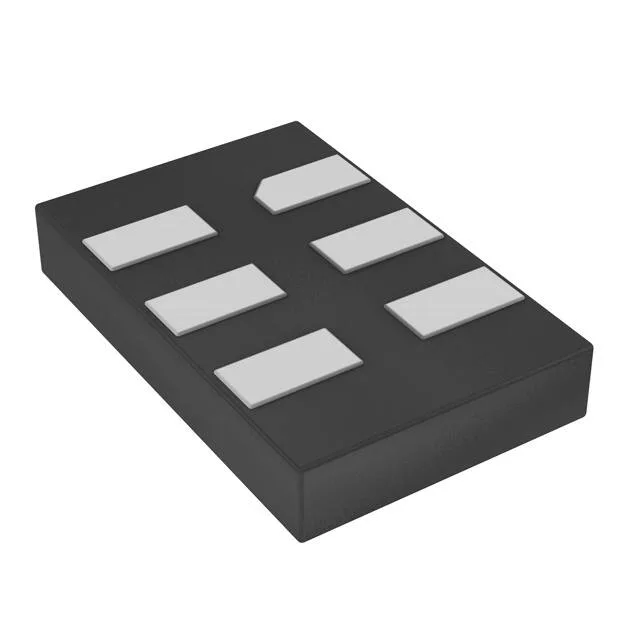
Microchip Technology DSC1123BI2-225.0000T — Crystals & Oscillators

DSC1123BI2-225.0000T — 225 MHz LVDS MEMS XO, AEC-Q100

MPNDSC1123BI2-225.0000T
Active

Microchip Technology DSC1123 series, XO (Standard), 225 MHz LVDS output, MEMS resonator, 6-SMD no-lead package, AEC-Q100 qualified, ±25 ppm stability, 2.25 V to 3.63 V supply, Enable/Disable function.

Independent supplier — new & surplus stockAuthenticity-screened · ESD-safe packingListing updated Aug 2026

Specifications

DSC1123BI2-225.0000T specifications
ParameterValue
TypeXO (Standard)
SeriesDSC1123
MountingSurface Mount
Supply voltage2.25V ~ 3.63V
Current - supply32mA
Current - supply (Disable)22mA
Frequency225 MHz
Frequency stability±25ppm
Operating temperature-40°C~85°C
Size (Dimension)0.197\" L x 0.126\" W (5.00mm x 3.20mm)
Height - seated0.035\" (0.90mm)
OutputLVDS
PackageTape & Reel (TR)
RatingsAEC-Q100
FunctionEnable/Disable
Base resonatorMEMS
Case6-SMD, No Lead

Product details

225 MHz LVDS MEMS oscillator — AEC-Q100 qualified

The DSC1123BI2-225.0000T is a 225 MHz LVDS output MEMS oscillator from Microchip's DSC1123 series.

Maximum supply current is 32 mA when enabled and 22 mA in disable mode — the disable function (pin-controlled) drops the output to high-Z and reduces draw by about 30 % for power-sensitive sleep states.

Housed in a 6-SMD no-lead package measuring 5.00 mm x 3.20 mm with a seated height of 0.90 mm. The surface-mount footprint is standard for this form factor — no via-in-pad required — and the 225 MHz LVDS output needs controlled-impedance traces (50 Ω single-ended, 100 Ω differential) on the PCB to preserve signal integrity.

Frequently asked questions

Is DSC1123BI2-225.0000T AEC-Q100 qualified?

Yes — the part carries an AEC-Q100 rating.

What output type does DSC1123BI2-225.0000T provide?

It provides LVDS (Low-Voltage Differential Signaling) output. LVDS is a differential, low-swing signal that offers better noise immunity and lower EMI than single-ended CMOS — required for high-speed clock distribution to SerDes, FPGA transceivers, and Ethernet PHYs at 225 MHz.