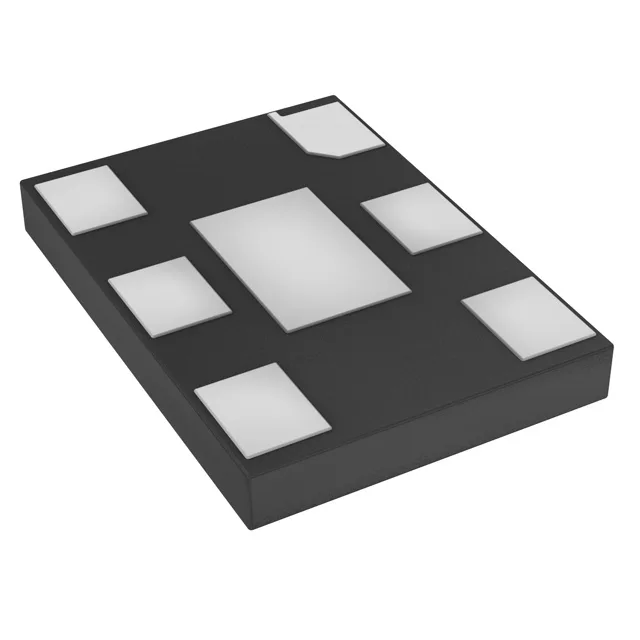
Microchip Technology DSC1123AM1-287.0000 — Crystals & Oscillators

DSC1123AM1-287.0000 – Microchip 287 MHz LVDS MEMS XO –

MPNDSC1123AM1-287.0000
Active

Microchip Technology DSC1123AM1-287.0000, DSC1123 series XO (Standard), 287 MHz LVDS output, MEMS resonator, 6-VDFN exposed pad, 2.25V–3.63V supply, ±50 ppm APR, Enable/Disable function, active lifecycle.

Sourced new & surplus through independent channelsAuthenticity-screened · ESD-safe packingListing updated Aug 2026

Specifications

DSC1123AM1-287.0000 specifications
ParameterValue
TypeXO (Standard)
SeriesDSC1123
MountingSurface Mount
Voltage2.25V ~ 3.63V
Current - supply32mA
Current - supply (Disable)22mA
Frequency287 MHz
Size (Dimension)0.276\" L x 0.197\" W (7.00mm x 5.00mm)
Height - seated0.035\" (0.90mm)
OutputLVDS
PackageTube
FunctionEnable/Disable
Base resonatorMEMS
Case6-VDFN Exposed Pad
Absolute pull range±50ppm

Product details

287 MHz LVDS clock for high-speed serial links

The DSC1123AM1-287.0000 delivers a 287 MHz LVDS output from a MEMS resonator — the frequency and signaling pair it for clocking a 10 GbE PHY, a SerDes reference, or an FPGA transceiver bank that expects LVDS on the input. LVDS differential swing keeps the edge rates clean across a short PCB trace; the 32 mA max supply draw is the total current budget for the oscillator itself, not counting the line termination.

Supply flexibility and frequency hold-in

The 2.25V–3.63V supply range lets this oscillator run off a 2.5V or 3.3V rail without a dedicated LDO — useful when the FPGA bank voltage is already set. The ±50 ppm absolute pull range is the total frequency variation over voltage, temperature, and aging; a system PLL that needs better than 50 ppm total drift must budget the oscillator's APR into its hold-in calculation.

Active production — no end-of-life watch

Frequently asked questions

What is the frequency stability of DSC1123AM1-287.0000?

The absolute pull range (APR) is ±50 ppm. This is the total frequency variation over the full operating voltage and temperature range, including aging. For a PLL that needs tighter than 50 ppm total drift, this oscillator will not hold lock.