Why this oscillator exists — and where it saves a board spin
Its AEC-Q100 rating means it's qualified for automotive applications — under-hood ECUs, ADAS sensors, or infotainment modules where a quartz oscillator might drift or fail under vibration.
What the LVDS output and 148.35 MHz mean for your clock tree
LVDS is a differential pair — it rejects common-mode noise and keeps the signal clean over longer traces on a 4-layer or 6-layer board. At 148.35 MHz, that matters because the rise time is short enough that a single-ended clock would radiate into adjacent traces. The supply voltage range of 2.25V to 3.63V lets it run from a 2.5V or 3.3V rail without an extra regulator, and the Enable/Disable function lets you gate the clock for power-saving modes — the disable current drops to 22 mA max from 32 mA max.
Active lifecycle — no last-time-buy panic
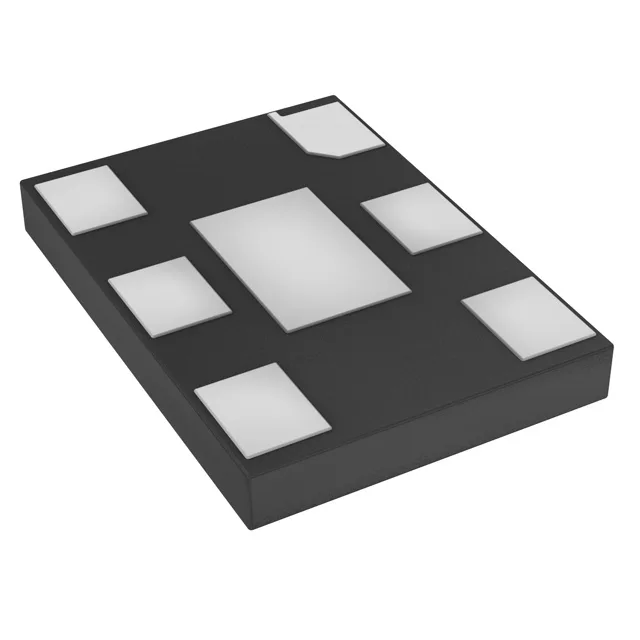
The 6-SMD No Lead Exposed Pad package (7.00mm x 5.00mm) is a common footprint shared with other DSC1123 frequency variants, so a BOM swap to a different frequency in the same series is a direct drop-in.