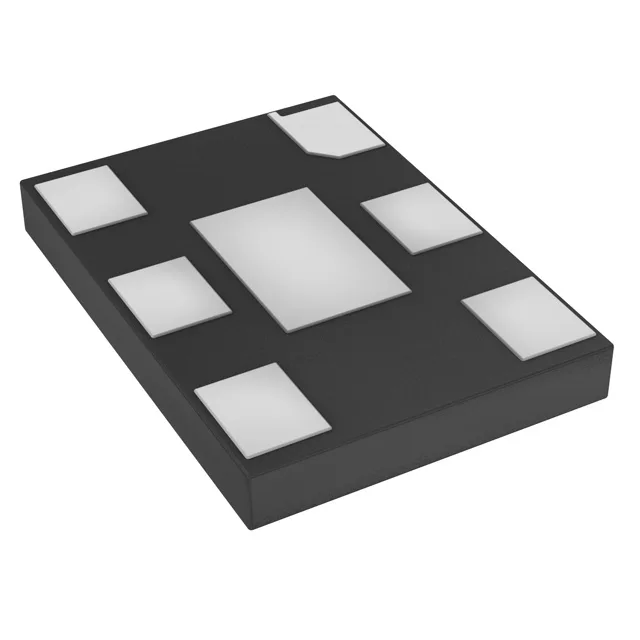
Microchip Technology DSC1123AI5-133.3300T — Crystals & Oscillators

DSC1123AI5-133.3300T MEMS LVDS Oscillator

MPNDSC1123AI5-133.3300T
End of Life

Microchip DSC1123 series, XO (Standard), LVDS output, 133.33 MHz, MEMS base resonator, ±10ppm stability, AEC-Q100, -40°C to 85°C

$14.3000Ref. price · indicative, final on quote
Sourced new & surplus through independent channelsAuthenticity-screened · ESD-safe packingListing updated Aug 2026

Specifications

DSC1123AI5-133.3300T specifications
ParameterValue
TypeXO (Standard)
SeriesDSC1123
MountingSurface Mount
Voltage2.25V ~ 3.63V
Current - supply32mA
Current - supply (Disable)22mA
Frequency133.33 MHz
Frequency stability±10ppm
Operating temperature-40°C ~ 85°C
Size (Dimension)0.276\" L x 0.197\" W (7.00mm x 5.00mm)
Height - seated0.035\" (0.90mm)
OutputLVDS
RatingsAEC-Q100
FunctionEnable/Disable
PackageTape & Reel (TR)
Base resonatorMEMS
Case6-SMD, No Lead Exposed Pad

Product details

MEMS timing for the engine bay

The DSC1123AI5-133.3300T is a MEMS-based XO that delivers a 133.33 MHz LVDS clock with ±10ppm frequency stability across -40°C to 85°C. That stability is held without a quartz crystal — the MEMS resonator is immune to the vibration and shock that can pull a quartz fundamental off frequency in an automotive environment.

Supply tolerance and enable discipline

The 2.25V to 3.63V supply range covers 2.5V and 3.3V rails with margin — no extra LDO needed if the rail droops under load.

The 6-SMD no-lead exposed-pad package (7.00mm x 5.00mm, 0.90mm seated height) is a standard footprint for 7×5 oscillators.

The DSC1123 series is Microchip's current MEMS oscillator family — no direct pin-compatible second source from another manufacturer is listed. For BOM planning, this is a single-source item; order against an RFQ for quantity and lead-time confirmation.

Frequently asked questions

Does DSC1123AI5-133.3300T require external pull-up resistors on the LVDS output?

No. The LVDS output is a current-mode differential pair that does not need external pull-up or pull-down resistors. The receiver termination (100Ω across the pair) is the only external component required.

How does this MEMS oscillator compare in phase noise to a traditional quartz XO at 133.33 MHz?

MEMS oscillators typically have higher phase noise close to carrier (<10 kHz offset) than a good quartz SAW oscillator, but the gap narrows at offsets above 100 kHz. For digital clocking (FPGA, SerDes, Ethernet PHY) where the jitter integration bandwidth is 12 kHz–20 MHz, the MEMS part is often within spec. For RF synthesizer reference or ADC clocking where sub-100 fs rms jitter is required, a quartz VCXO or OCXO is still preferred.