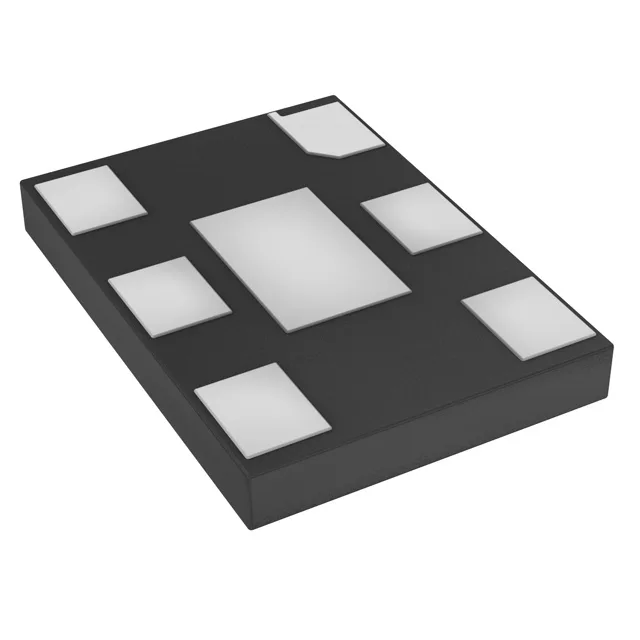
Microchip Technology DSC1123AI2-156.2500 — Crystals & Oscillators

DSC1123AI2-156.2500 MEMS XO 156.25 MHz LVDS AEC-Q100

MPNDSC1123AI2-156.2500
Active

Microchip Technology DSC1123AI2-156.2500, XO (Standard) MEMS oscillator, 156.25 MHz LVDS output, ±25 ppm stability, -40°C to +85°C, AEC-Q100, 6-SMD No Lead Exposed Pad

Independent supplier — new & surplus stockAuthenticity-screened · ESD-safe packingListing updated Aug 2026

Specifications

DSC1123AI2-156.2500 specifications
ParameterValue
TypeXO (Standard)
SeriesDSC1123
MountingSurface Mount
Supply voltage2.25V ~ 3.63V
Current - supply32mA
Current - supply (Disable)22mA
Frequency156.25 MHz
Frequency stability±25ppm
Operating temperature-40°C~85°C
Size (Dimension)0.276\" L x 0.197\" W (7.00mm x 5.00mm)
Height - seated0.035\" (0.90mm)
OutputLVDS
PackageTube
RatingsAEC-Q100
FunctionEnable/Disable
Base resonatorMEMS
Case6-SMD, No Lead Exposed Pad

Product details

156.25 MHz LVDS reference for high-speed serial links

The DSC1123AI2-156.2500 delivers a 156.25 MHz LVDS output from a MEMS resonator — a standard reference frequency for 10 Gigabit Ethernet, PCIe Gen 3, and other serial protocols that demand sub-1 ps RMS jitter. LVDS differential signaling keeps noise immunity high over long PCB traces, and the 2.25V to 3.63V supply range lets it share a 2.5V or 3.3V rail without an extra regulator.

The MEMS base resonator is inherently more robust than quartz — no crystal aging drift, faster startup, and better resistance to 50,000 g shock.

Listed as Active by Microchip.

Frequently asked questions

Is the DSC1123AI2-156.2500 pin-compatible with other DSC1123 family oscillators?

Yes — the DSC1123 series shares the same 6-SMD No Lead Exposed Pad footprint (7.00mm x 5.00mm) and pinout across all frequency and output options. A design using a different DSC1123 variant can drop in the 156.2500 without a board spin, provided the supply voltage and output type match.

What does the Enable/Disable function do on this oscillator?

The Enable/Disable pin (pin 1) lets you tri-state the LVDS output. When pulled low, the output goes high-impedance and supply current drops to 22 mA max (from 32 mA max active). This is useful for power sequencing or sharing a clock line in multi-drop applications.