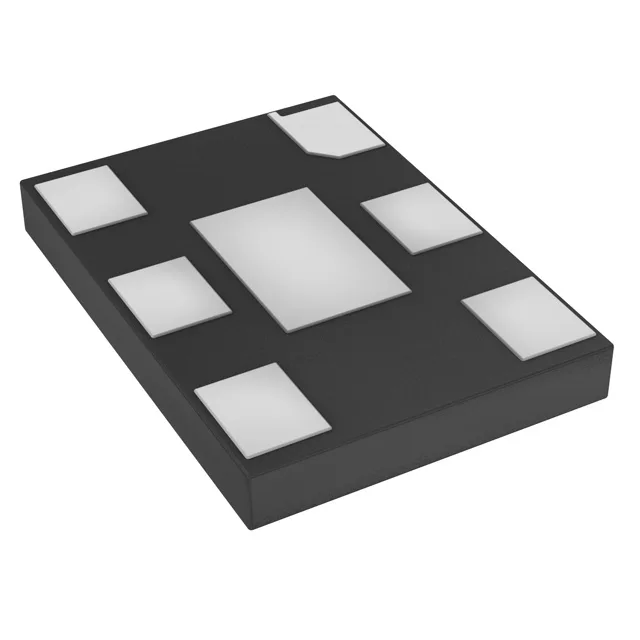
Microchip Technology DSC1123AI1-075.0000T — Crystals & Oscillators

DSC1123AI1-075.0000T – Microchip MEMS XO, LVDS, 75 MHz

MPNDSC1123AI1-075.0000T
Active

Microchip DSC1123AI1-075.0000T, XO (Standard) MEMS oscillator, 75 MHz LVDS output, ±50 ppm stability, 2.25V–3.63V supply, AEC-Q100 qualified, -40°C to +85°C, 6-SMD no-lead exposed pad package.

$2.8650Ref. price · indicative, final on quote
Independent supplier — new & surplus stockAuthenticity-screened · ESD-safe packingListing updated Aug 2026

Specifications

DSC1123AI1-075.0000T specifications
ParameterValue
TypeXO (Standard)
SeriesDSC1123
MountingSurface Mount
Supply voltage2.25V ~ 3.63V
Current - supply32mA
Current - supply (Disable)22mA
Frequency75 MHz
Frequency stability±50ppm
Operating temperature-40°C~85°C
Size (Dimension)0.276\" L x 0.197\" W (7.00mm x 5.00mm)
Height - seated0.035\" (0.90mm)
OutputLVDS
PackageTape & Reel (TR)
RatingsAEC-Q100
FunctionEnable/Disable
Base resonatorMEMS
Case6-SMD, No Lead Exposed Pad

Product details

MEMS oscillator with LVDS output for automotive clock trees

LVDS differential signalling provides low jitter and common-mode noise rejection, making this oscillator a fit for clocking high-speed interfaces such as Ethernet PHYs, PCIe reference clocks, and automotive SerDes links where signal integrity matters.

The supply voltage range of 2.25V to 3.63V allows the oscillator to operate from a 2.5V or 3.3V rail without an additional regulator, simplifying the power tree and reducing BOM count. Surface-mount 6-SMD no-lead exposed pad package (7.00 mm x 5.00 mm, 0.90 mm seated height) fits standard oscillator footprints; the exposed pad aids thermal conduction to the PCB ground plane.

Frequently asked questions

Is the DSC1123AI1-075.0000T AEC-Q100 qualified?

Yes, it carries an AEC-Q100 rating, making it suitable for automotive applications that require the reliability stress and temperature-grade qualification.

What is the output type of the DSC1123AI1-075.0000T?

The output is LVDS (Low-Voltage Differential Signalling), a differential standard that provides low jitter and noise immunity for high-speed clock distribution.