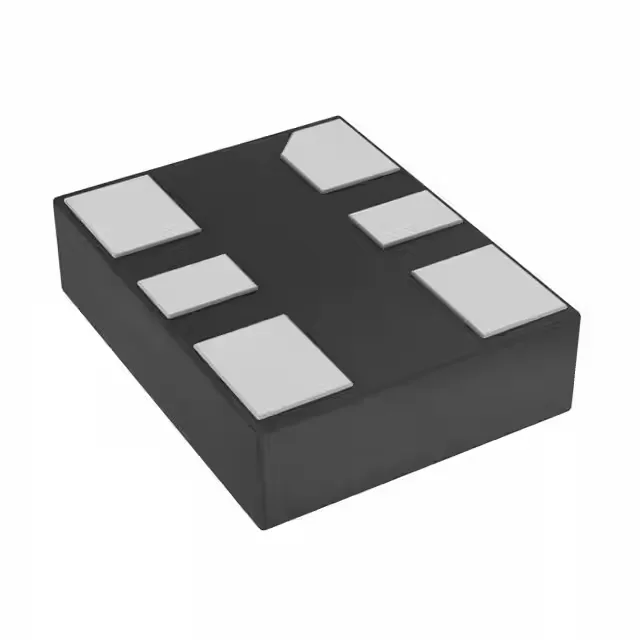
Microchip Technology DSC1122CI5-077.0000 — Crystals & Oscillators

DSC1122CI5-077.0000 MEMS XO, LVPECL 77 MHz, ±10 ppm

MPNDSC1122CI5-077.0000
Active

Microchip DSC1122CI5-077.0000, MEMS-based XO (Standard), LVPECL output at 77 MHz, ±10 ppm frequency stability, 2.25V–3.6V supply, -40°C to 85°C, 6-SMD No Lead package.

Independent supplier — new & surplus stockAuthenticity-screened · ESD-safe packingListing updated Aug 2026

Specifications

DSC1122CI5-077.0000 specifications
ParameterValue
TypeXO (Standard)
SeriesDSC1122
MountingSurface Mount
Supply voltage2.25V ~ 3.6V
Current - supply58mA
Current - supply (Disable)22mA
Frequency77 MHz
Frequency stability±10ppm
Operating temperature-40°C~85°C
Size (Dimension)0.126\" L x 0.098\" W (3.20mm x 2.50mm)
Height - seated0.035\" (0.90mm)
OutputLVPECL
PackageTube
FunctionEnable/Disable
Base resonatorMEMS
Case6-SMD, No Lead

Product details

LVPECL clock at 77 MHz — what the output type means for your receiver

LVPECL requires DC biasing at the receiver; the 2.25V–3.6V supply range lets it run off a common 2.5V or 3.3V rail without an intermediate regulator.

±10 ppm stability and industrial temperature range

6-SMD No Lead footprint — board layout fit

Packaged in a 6-SMD, No Lead case measuring 3.20 mm x 2.50 mm with a seated height of 0.90 mm.

Frequently asked questions

What is the output type and frequency of DSC1122CI5-077.0000?

LVPECL output at 77 MHz. The differential LVPECL signal is DC-coupled and requires a 50-ohm termination to Vcc – 2V at the receiver.

Is DSC1122CI5-077.0000 compatible with a 3.3V supply?

Yes. The supply voltage range is 2.25V to 3.6V, so both 2.5V and 3.3V rails are within spec without an external regulator.

What is the difference between DSC1122 and DSC1121?

The DSC1122 series outputs LVPECL, while the DSC1121 series outputs LVDS. Both are MEMS-based XOs with the same package and supply range — the output type is the key selection difference.