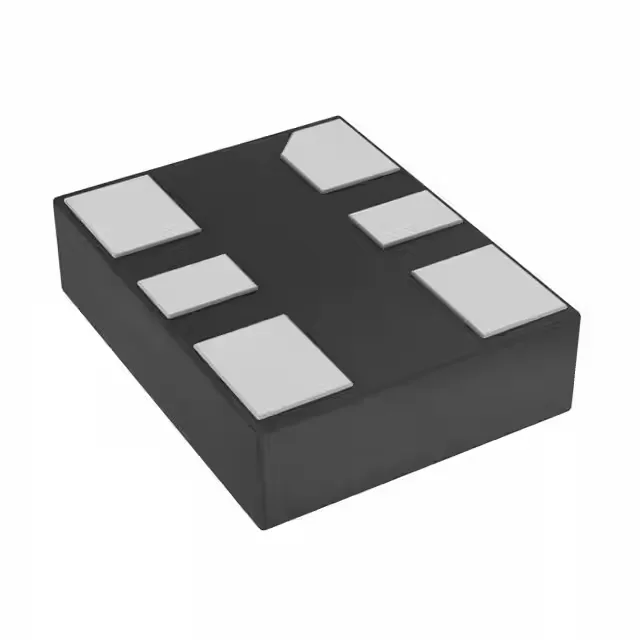
Microchip Technology DSC1122CI5-071.0000 — Crystals & Oscillators

DSC1122CI5-071.0000 MEMS XO, LVPECL, 71MHz, ±10ppm

MPNDSC1122CI5-071.0000
Active

Microchip DSC1122CI5-071.0000, XO (Standard) with MEMS base resonator, LVPECL output at 71 MHz, ±10ppm frequency stability, 2.25V–3.6V supply, -40°C to 85°C industrial temperature range.

Sourced new & surplus through independent channelsAuthenticity-screened · ESD-safe packingListing updated Aug 2026

Specifications

DSC1122CI5-071.0000 specifications
ParameterValue
TypeXO (Standard)
SeriesDSC1122
MountingSurface Mount
Voltage2.25V ~ 3.6V
Current - supply58mA
Current - supply (Disable)22mA
Frequency71 MHz
Frequency stability±10ppm
Operating temperature-40°C~85°C
Size (Dimension)0.126\" L x 0.098\" W (3.20mm x 2.50mm)
Height - seated0.035\" (0.90mm)
OutputLVPECL
PackageTube
FunctionEnable/Disable
Base resonatorMEMS
Case6-SMD, No Lead

Product details

MEMS oscillator for high-speed clock distribution

The LVPECL output is designed to drive differential clock lines in high-speed networking, FPGA reference clocks, and SerDes interfaces where single-ended CMOS would suffer from common-mode noise.

Industrial temperature and tight stability for precision timing

The ±10ppm frequency stability is tighter than the ±25ppm or ±50ppm typical of commodity quartz oscillators — relevant for Ethernet timing (e.g., 25 MHz reference for 1GbE) or wireless base station local oscillators where ppm error directly affects the bit-error rate.

Wide supply voltage simplifies rail planning

The 2.25V to 3.6V supply range means the same part works on a 2.5V or 3.3V rail without a separate LDO — useful when the BOM already carries both voltages and the oscillator needs to follow a power-up sequence.

The DSC1122 family is a current product line; the datasheet and application notes are available from Microchip.

Frequently asked questions

Is DSC1122CI5-071.0000 a replacement for quartz oscillators?

Yes — the MEMS base resonator is a drop-in replacement for quartz-based XOs in the same 6-SMD, No Lead footprint. The LVPECL output is a differential signal, so the downstream receiver must be LVPECL-compatible; if your board uses a CMOS or LVDS clock input, you need a different output option from the DSC1122 family. The ±10ppm stability is tighter than most quartz oscillators, so the replacement may actually improve timing margin.