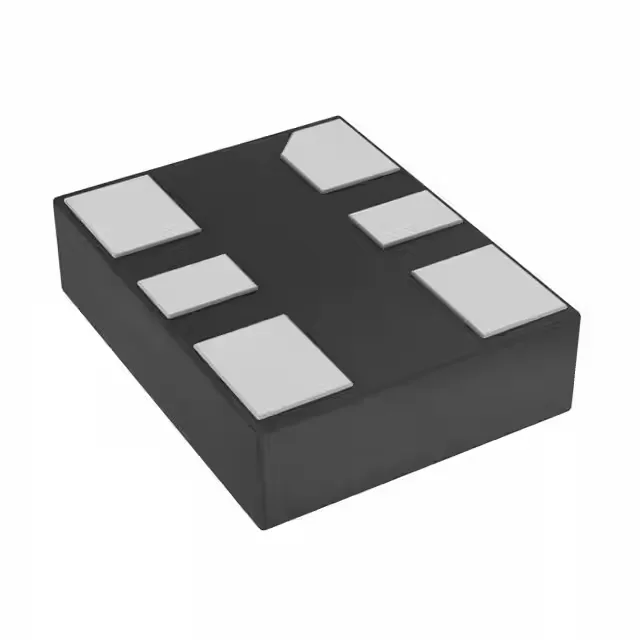
That 156.25 MHz frequency is the standard reference for 10 Gigabit Ethernet (XAUI) and Fibre Channel SERDES, and the LVPECL differential output delivers the edge rates those PHYs require without additional translation. The MEMS base resonator gives this part an advantage in shock and vibration environments compared to a quartz SAW or fundamental-mode crystal — the silicon resonator structure is less susceptible to microphonics and mechanical resonance, which matters in outdoor telecom cabinets and industrial motor drives where fan vibration couples into the board. The 3.20 mm x 2.50 mm 6-SMD No Lead package is the standard footprint for this class of oscillator — the same land pattern used by SiTime and Epson SG series parts, so a board designed for one can usually accept this Microchip part with a layout review of the output termination.
The ±50 ppm frequency stability holds across that range — enough margin for a 156.25 MHz reference clock in a 10GBASE-KR backplane where the total timing budget is typically ±100 ppm.