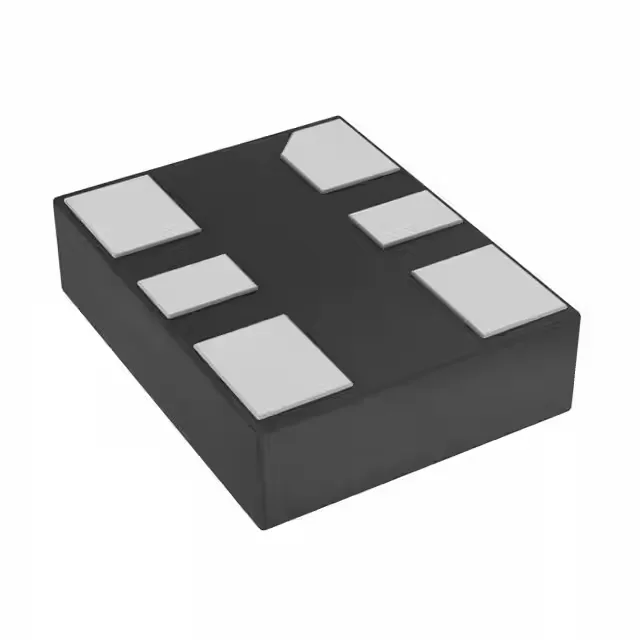
Microchip Technology DSC1122CE5-068.0000 — Crystals & Oscillators

DSC1122CE5-068.0000 – Microchip MEMS XO, LVPECL, 68 MHz

MPNDSC1122CE5-068.0000
Active

Microchip Technology DSC1122CE5-068.0000, XO (Standard) MEMS oscillator, LVPECL output, 68 MHz, ±10 ppm stability, 2.25V–3.6V supply, 6-SMD no-lead package

Sourced new & surplus through independent channelsAuthenticity-screened · ESD-safe packingListing updated Aug 2026

Specifications

DSC1122CE5-068.0000 specifications
ParameterValue
TypeXO (Standard)
SeriesDSC1122
MountingSurface Mount
Voltage2.25V ~ 3.6V
Current - supply58mA
Current - supply (Disable)22mA
Frequency68 MHz
Frequency stability±10ppm
Operating temperature-20°C~70°C
Size (Dimension)0.126\" L x 0.098\" W (3.20mm x 2.50mm)
Height - seated0.035\" (0.90mm)
OutputLVPECL
PackageTube
FunctionEnable/Disable
Base resonatorMEMS
Case6-SMD, No Lead

Product details

LVPECL clock at 68 MHz – what the output type means for your signal chain

The DSC1122CE5-068.0000 delivers a LVPECL output at 68 MHz, a differential signaling standard that maintains low jitter and fast edge rates over PCB traces longer than a few inches — the right choice for clocking high-speed ADCs, FPGAs, or SERDES interfaces where single-ended LVCMOS would introduce too much noise or skew.

Supply range and stability – fitting the rail and the timing budget

Frequency stability is specified at ±10 ppm over the -20°C to 70°C operating range, which keeps the clock edge within a 20-ppm window across temperature — sufficient for 1000BASE-T Ethernet or a 68 MHz reference for a Cortex-M core where tighter ppm avoids bit errors.

Enable/Disable function and current draw

Package and board layout – 6-SMD no-lead

The package measures 3.20 mm x 2.50 mm with a seated height of 0.90 mm, fitting tight PCB real estate. The no-lead footprint means thermal and electrical connection is through bottom pads.

Frequently asked questions

What is the output type of DSC1122CE5-068.0000?

The output is LVPECL (Low-Voltage Positive Emitter-Coupled Logic), a differential signal standard that provides low jitter and fast edge rates for high-frequency clock distribution.