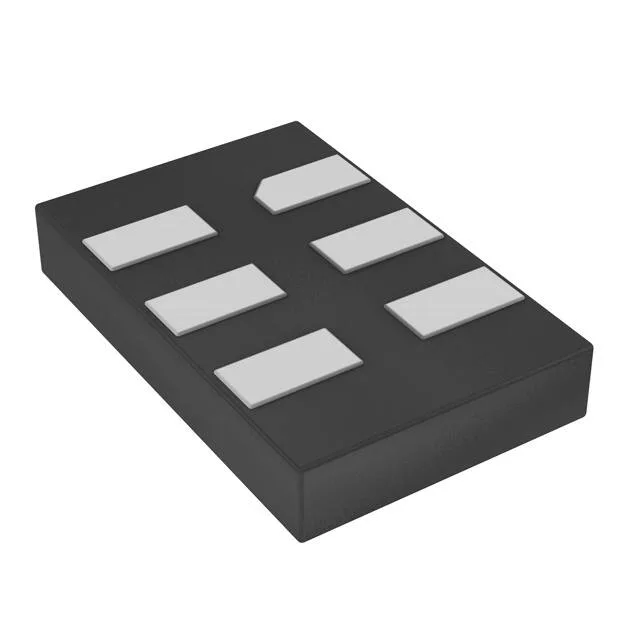
Microchip Technology DSC1122BI2-150.0000T — Crystals & Oscillators

DSC1122BI2-150.0000T – Microchip MEMS XO, 150 MHz LVPECL

MPNDSC1122BI2-150.0000T
Obsolete

Microchip DSC1122 series MEMS XO (Standard), 150 MHz, LVPECL output, ±25 ppm stability, 2.25 V ~ 3.6 V supply, -40°C to 85°C, 6-SMD no-lead, Tape & Reel

$2.1000Ref. price · indicative, final on quote
Sourced new & surplus through independent channelsAuthenticity-screened · ESD-safe packingListing updated Jul 2026

Specifications

DSC1122BI2-150.0000T specifications
ParameterValue
TypeXO (Standard)
SeriesDSC1122
MountingSurface Mount
Voltage2.25V ~ 3.6V
Current - supply58mA
Current - supply (Disable)22mA
Frequency150 MHz
Frequency stability±25ppm
Operating temperature-40°C~85°C
Size (Dimension)0.197\" L x 0.126\" W (5.00mm x 3.20mm)
Height - seated0.035\" (0.90mm)
OutputLVPECL
PackageTape & Reel (TR)
FunctionEnable/Disable
Base resonatorMEMS
Case6-SMD, No Lead

Product details

MEMS XO for high-frequency clock distribution

No pin-compatible successor from Microchip is listed; the DSC1122 series as a whole is discontinued, so a board-level change to a current MEMS oscillator family (e.g., DSC1123 or DSC61xx series) may be required for volume production.

The Enable/Disable pin (tri-state output when pulled low) draws 22 mA max when disabled, useful for power-gating unused clock domains. Max supply current is 58 mA at 150 MHz LVPECL — the differential output pair drives 50-ohm terminated lines directly, so the current budget includes the load termination.

6-SMD no-lead package, 5.00 mm x 3.20 mm, seated height 0.90 mm max — standard footprint for MEMS oscillators, no via-in-pad needed. The MEMS die is hermetically sealed at the wafer level, so moisture sensitivity is typically MSL 1 (no bake required before reflow), but verify the date code on the reel.

Frequently asked questions

What is the output type of DSC1122BI2-150.0000T?

LVPECL (Low-Voltage Positive Emitter-Coupled Logic) — a differential output that delivers 150 MHz with fast edge rates and low jitter, requiring 50-ohm termination to VCC-2V on the receiving end.