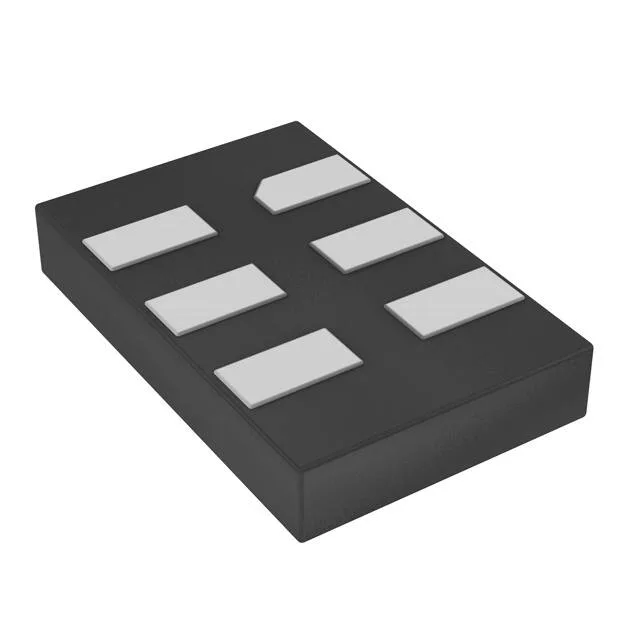
Microchip Technology DSC1122BI2-120.0000 — Crystals & Oscillators

DSC1122BI2-120.0000 120 MHz LVPECL MEMS Oscillator

MPNDSC1122BI2-120.0000
Active

Microchip DSC1122BI2-120.0000, XO (Standard) MEMS oscillator, 120 MHz LVPECL output, ±25 ppm stability, 2.25V–3.6V supply, -40°C to 85°C, 6-SMD no-lead package.

Independent supplier — new & surplus stockAuthenticity-screened · ESD-safe packingListing updated Aug 2026

Specifications

DSC1122BI2-120.0000 specifications
ParameterValue
TypeXO (Standard)
SeriesDSC1122
MountingSurface Mount
Supply voltage2.25V ~ 3.6V
Current - supply58mA
Current - supply (Disable)22mA
Frequency120 MHz
Frequency stability±25ppm
Operating temperature-40°C~85°C
Size (Dimension)0.197\" L x 0.126\" W (5.00mm x 3.20mm)
Height - seated0.035\" (0.90mm)
OutputLVPECL
PackageTube
FunctionEnable/Disable
Base resonatorMEMS
Case6-SMD, No Lead

Product details

120 MHz LVPECL timing for high-speed signal chains

Supply voltage spans 2.25V to 3.6V, so the same oscillator can be biased from a 2.5V or 3.3V rail without a dedicated LDO — useful when the board has multiple core voltages and you want to avoid an extra regulator just for the clock.

No last-time-buy window or successor part has been announced.

MEMS vs quartz: what the resonator choice means

Frequently asked questions

Is the DSC1122BI2-120.0000 pin-compatible with other DSC1122 variants?

Yes — all DSC1122 oscillators share the same 6-SMD no-lead footprint (5.00mm x 3.20mm) and pinout. You can substitute a different frequency or stability grade within the series without a board layout change, as long as the output type (LVPECL) and supply voltage range match.

What is the difference between MEMS and quartz oscillators?

MEMS oscillators use a silicon micro-electromechanical resonator instead of a quartz crystal. They typically start up in under 1 ms (vs 5–10 ms for quartz), withstand higher shock (50,000 g vs ~3,000 g), and have no mechanical aging drift. The trade-off is that phase noise at very close-in offsets (10 Hz–1 kHz) can be higher than a good quartz oscillator — check the jitter spec for your PLL bandwidth.