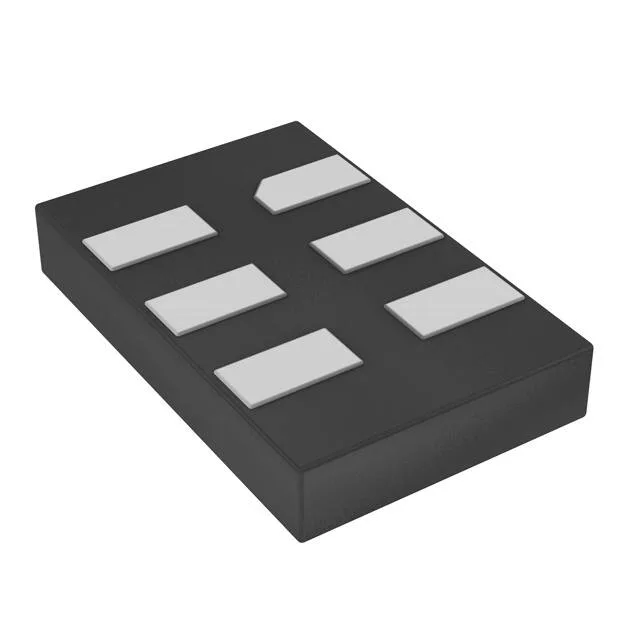
Microchip Technology DSC1122BI2-100.0000T — Crystals & Oscillators

DSC1122BI2-100.0000T Microchip MEMS XO 100MHz LVPECL Active

MPNDSC1122BI2-100.0000T
Active

Microchip DSC1122 series MEMS-based XO (Standard), 100 MHz LVPECL output, ±25 ppm stability, 2.25V–3.6V supply, -40°C to 85°C, 6-SMD package, Enable/Disable function

$3.0150Ref. price · indicative, final on quote
Independent supplier — new & surplus stockAuthenticity-screened · ESD-safe packingListing updated Aug 2026

Specifications

DSC1122BI2-100.0000T specifications
ParameterValue
TypeXO (Standard)
SeriesDSC1122
MountingSurface Mount
Supply voltage2.25V ~ 3.6V
Current - supply58mA
Current - supply (Disable)22mA
Frequency100 MHz
Frequency stability±25ppm
Operating temperature-40°C~85°C
Size (Dimension)0.197\" L x 0.126\" W (5.00mm x 3.20mm)
Height - seated0.035\" (0.90mm)
OutputLVPECL
PackageTape & Reel (TR)
FunctionEnable/Disable
Base resonatorMEMS
Case6-SMD, No Lead

Product details

100 MHz LVPECL MEMS oscillator for high-speed clock trees

Supply range and enable/disable for shared rails

The 2.25V to 3.6V supply range lets this oscillator run from a 2.5V or 3.3V rail without a dedicated regulator. The Enable/Disable pin (tri-level: high = output, low = high-Z, float = output via internal pull-up) simplifies power sequencing — the disable state draws 22 mA max, so the clock can be gated at the source rather than with an external buffer.

The DSC1122 series is a mature MEMS oscillator family with multiple frequency and stability variants sharing the same 6-SMD footprint — a BOM change to a different DSC1122 frequency or stability grade requires no board layout revision.

Frequently asked questions

Is the DSC1122BI2-100.0000T compatible with a 3.3V supply?

Yes. The supply range is 2.25V to 3.6V, so a 3.3V rail is within the operating envelope. The LVPECL output swing scales with Vdd — at 3.3V the differential swing is approximately 800 mV, which meets the LVPECL input threshold of most receivers.

Does the DSC1122BI2-100.0000T support the enable/disable function?

Yes. The Enable/Disable pin is standard on this part. Driving the pin low disables the output (high-Z state), reducing supply current from 58 mA max to 22 mA max. The pin has an internal pull-up, so leaving it floating enables the output by default.