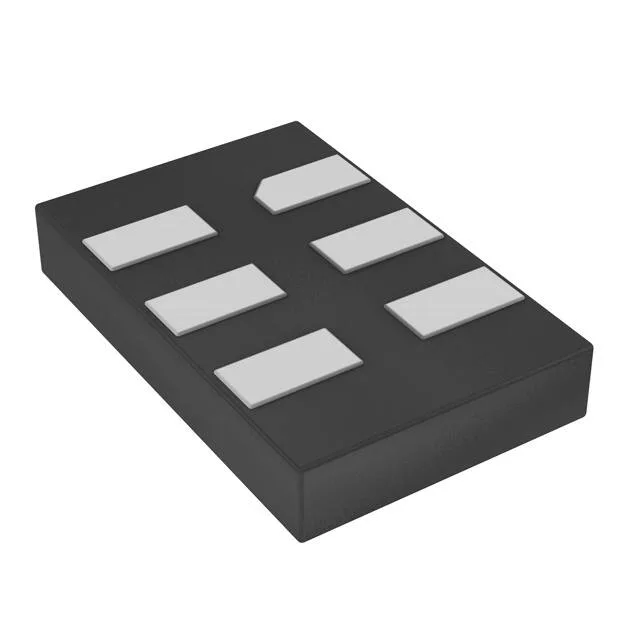
Microchip Technology DSC1122BE1-150.0000T — Crystals & Oscillators

DSC1122BE1-150.0000T Microchip MEMS XO 150 MHz LVPECL Active

MPNDSC1122BE1-150.0000T
Active

Microchip DSC1122BE1-150.0000T, MEMS-based XO (Standard), 150 MHz LVPECL output, 2.25 V to 3.6 V supply, ±50 ppm stability, -20°C to 70°C, 6-SMD package, Tape & Reel.

Sourced new & surplus through independent channelsAuthenticity-screened · ESD-safe packingListing updated Aug 2026

Specifications

DSC1122BE1-150.0000T specifications
ParameterValue
TypeXO (Standard)
SeriesDSC1122
MountingSurface Mount
Voltage2.25V ~ 3.6V
Current - supply58mA
Current - supply (Disable)22mA
Frequency150 MHz
Frequency stability±50ppm
Operating temperature-20°C~70°C
Size (Dimension)0.197\" L x 0.126\" W (5.00mm x 3.20mm)
Height - seated0.035\" (0.90mm)
OutputLVPECL
PackageTape & Reel (TR)
FunctionEnable/Disable
Base resonatorMEMS
Case6-SMD, No Lead

Product details

150 MHz LVPECL clock from a MEMS resonator

The DSC1122BE1-150.0000T delivers a 150 MHz LVPECL output from a MEMS resonator, eliminating the quartz-crystal startup and aging concerns. The LVPECL swing requires a 50-ohm terminated differential pair on the PCB — the trace impedance must match the receiver's input structure to avoid reflections at this frequency.

Listed as Active by Microchip — no last-time-buy window, no end-of-life notice. The DSC1122 series shares the same 6-SMD footprint across frequency variants, so a BOM change to a different frequency keeps the same PCB layout.

Commercial temperature grade limits deployment

The oscillator will not meet spec in an outdoor base station, engine bay, or cold-storage environment. For industrial applications, the DSC1122 series offers extended-temperature variants; confirm the suffix before committing the BOM.

Frequently asked questions

What is the frequency stability of the DSC1122?

±50 ppm over the operating temperature range. This is typical for a standard XO — adequate for Ethernet and general-purpose clocking but not for precision timing applications.