Why specify a MEMS oscillator at 19.2 MHz
The 2.25V to 3.6V supply range means the oscillator can be powered directly from a 2.5V or 3.3V rail without an intermediate regulator, and the Enable/Disable function lets the system gate the clock for power-down modes — the disable current drops to 22 mA max from the 35 mA max active draw.
Frequency stability and temperature — the ±25 ppm envelope
For a 19.2 MHz clock, ±25 ppm is ±480 Hz of absolute error; a UART or CAN bus running at 19.2 MHz will hold its bit timing within tolerance across the full temperature sweep. The MEMS resonator's frequency vs. temperature curve is more linear than a quartz AT-cut's cubic curve, which simplifies the compensation circuitry and keeps the stability spec tighter over the full military temperature band.
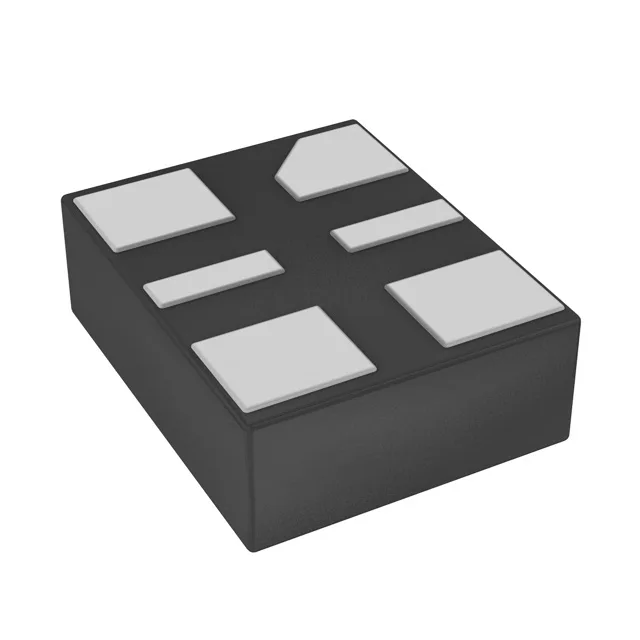
The 6-SMD, No Lead package measures 2.50mm x 2.00mm with a seated height of 0.90mm — this is a compact footprint that matches the industry-standard 2.5x2.0mm oscillator land pattern, so the PCB layout is the same as for any quartz oscillator in that form factor. Surface-mount mounting with a tape-and-reel delivery means the part is compatible with standard pick-and-place and reflow assembly. The MEMS die is encapsulated in the package, so no special handling beyond standard MSL precautions is required.