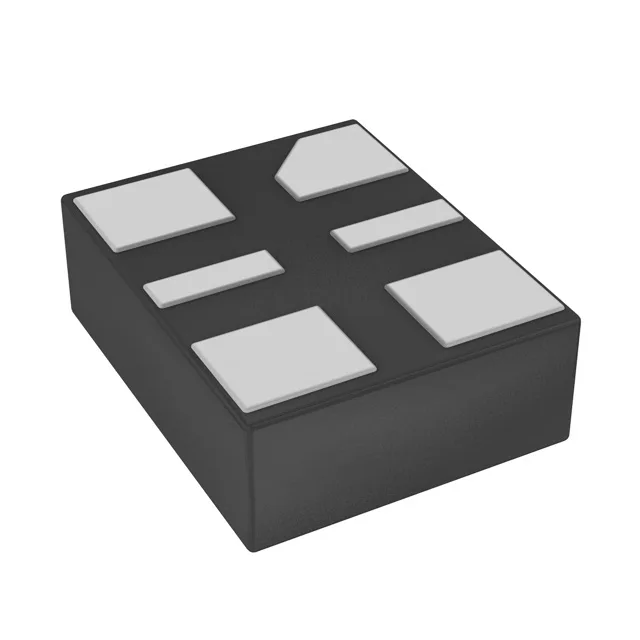
Microchip Technology DSC1121DL5-040.0000T — Crystals & Oscillators

DSC1121DL5-040.0000T MEMS Oscillator 40 MHz ±10 ppm -

MPNDSC1121DL5-040.0000T
Active

Microchip Technology DSC1121DL5-040.0000T, MEMS-based XO (Standard), 40 MHz CMOS output, ±10 ppm frequency stability, 2.25V–3.6V supply, -40°C to 105°C, 6-VDFN package, Tape & Reel.

Independent supplier — new & surplus stockAuthenticity-screened · ESD-safe packingListing updated Aug 2026

Specifications

DSC1121DL5-040.0000T specifications
ParameterValue
TypeXO (Standard)
SeriesDSC1121
MountingSurface Mount
Supply voltage2.25V ~ 3.6V
Current - supply22mA
Current - supply (Disable)35mA
Frequency40 MHz
Frequency stability±10ppm
Operating temperature-40°C~105°C
Size (Dimension)0.098\" L x 0.079\" W (2.50mm x 2.00mm)
Height - seated0.035\" (0.90mm)
OutputCMOS
PackageTape & Reel (TR)
FunctionEnable/Disable
Base resonatorMEMS
Case6-VDFN

Product details

40 MHz MEMS XO with ±10 ppm stability

The DSC1121DL5-040.0000T is a 40 MHz MEMS-based oscillator (XO) from Microchip's DSC1121 series, delivering a CMOS output with ±10 ppm frequency stability across its full -40°C to 105°C industrial temperature range. The MEMS resonator construction provides inherent shock and vibration tolerance compared to quartz-based oscillators, and the supply voltage range of 2.25V to 3.6V lets it operate from 2.5V or 3.3V rails without a separate regulator.

Active production, sourced per RFQ

The 6-VDFN package (2.50 mm x 2.00 mm, 0.90 mm seated height) is a surface-mount footprint common to MEMS oscillators in this frequency range.

Frequently asked questions

What is the frequency stability of the DSC1121DL5-040.0000T?

This tight stability makes it suitable for precision clocking in industrial networking, motor drives, and outdoor telecom equipment where temperature drift must be minimised.

Can the DSC1121DL5-040.0000T replace a 40 MHz quartz oscillator?

Yes, it is a functional drop-in replacement for a 40 MHz quartz oscillator in the same 6-VDFN footprint, provided the supply voltage (2.25V–3.6V) and output type (CMOS) match the socket. The MEMS construction offers better shock resistance and typically shorter lead times than quartz equivalents. Confirm the Enable/Disable pin logic on your board — the DSC1121 uses a standard active-high enable.

What is the difference between MEMS and quartz oscillators?

MEMS oscillators use a silicon micro-electromechanical resonator instead of a quartz crystal. The MEMS construction delivers higher shock and vibration tolerance, faster start-up, and often shorter manufacturing lead times. The DSC1121DL5-040.0000T's ±10 ppm stability is comparable to many quartz XOs, but the MEMS base resonator provides better reliability in harsh environments.

How does the Enable/Disable function work on the DSC1121?

The Enable/Disable pin gates the CMOS output. When disabled, the supply current drops to 35 mA max from 22 mA max when enabled. This allows the system to shut down the clock for power saving or to isolate the clock during boundary-scan testing without removing power from the oscillator.