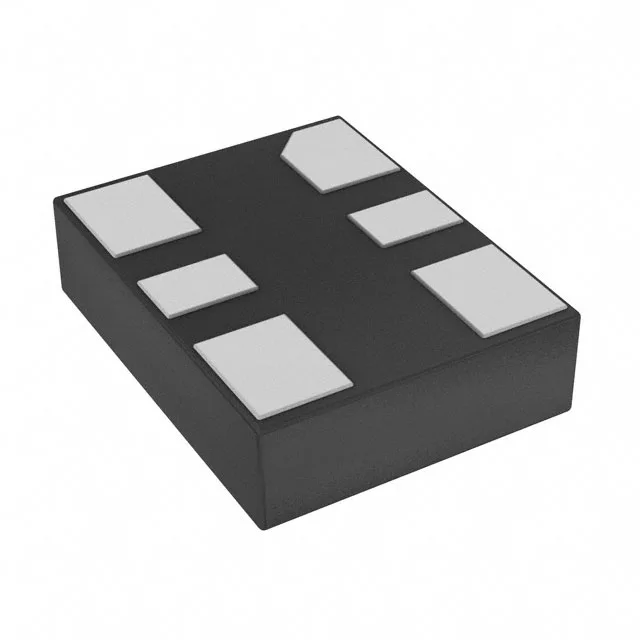
Microchip Technology DSC1121CM1-026.5625 — Crystals & Oscillators

DSC1121CM1-026.5625 MEMS XO – 26.5625 MHz, CMOS, AEC-Q100

MPNDSC1121CM1-026.5625
Active

Microchip Technology DSC1121 series MEMS XO, 26.5625 MHz CMOS output, ±50 ppm stability, 2.25V–3.6V supply, AEC-Q100 qualified, -55°C to 125°C, 6-SMD package

Sourced new & surplus through independent channelsAuthenticity-screened · ESD-safe packingListing updated Aug 2026

Specifications

DSC1121CM1-026.5625 specifications
ParameterValue
TypeXO (Standard)
SeriesDSC1121
MountingSurface Mount
Voltage2.25V ~ 3.6V
Current - supply35mA
Current - supply (Disable)22mA
Frequency26.5625 MHz
Frequency stability±50ppm
Operating temperature-55°C ~ 125°C
Size (Dimension)0.126\" L x 0.098\" W (3.20mm x 2.50mm)
Height - seated0.035\" (0.90mm)
OutputCMOS
PackageTube
RatingsAEC-Q100
FunctionEnable/Disable
Base resonatorMEMS
Case6-SMD, No Lead

Product details

The DSC1121CM1-026.5625 is a MEMS-based XO (Standard) that delivers a 26.5625 MHz CMOS clock from a 2.25V to 3.6V supply rail — the wide voltage range lets it run from a 2.5V or 3.3V rail without an external LDO.

MEMS resonator vs quartz — what it changes for the BOM

The ±50 ppm frequency stability covers the full temperature range and supply variation.

6-SMD, No Lead package measuring 3.20 mm x 2.50 mm with a seated height of 0.90 mm — the standard 3.2 x 2.5 mm MEMS oscillator footprint. Surface-mount reflow profile follows JEDEC J-STD-020 for MSL level; no special bake required before assembly if the moisture barrier bag is intact. The Enable/Disable pin is active-low (disable when pulled low). If the pin is left floating, internal pull-up keeps the oscillator enabled — but for production, tie it to Vdd or a GPIO to avoid noise coupling.

Frequently asked questions

Is DSC1121CM1-026.5625 a drop-in replacement for conventional quartz oscillators?

Yes — the DSC1121 series uses a MEMS resonator but is footprint- and function-compatible with standard 3.2 x 2.5 mm quartz XOs. The CMOS output, supply voltage range, and Enable/Disable pinout match the industry-standard 6-SMD layout. No board spin is required to swap from quartz to this MEMS part.

What is the difference between the DSC1121 and DSC1122 series?

The DSC1121 series (this part) offers a standard ±50 ppm frequency stability. The DSC1122 series provides ±25 ppm stability for tighter timing budgets. Both share the same MEMS resonator, package, supply range, and temperature grade. The DSC1122 is the higher-stability sibling; the DSC1121 is the cost-optimized choice for most applications.