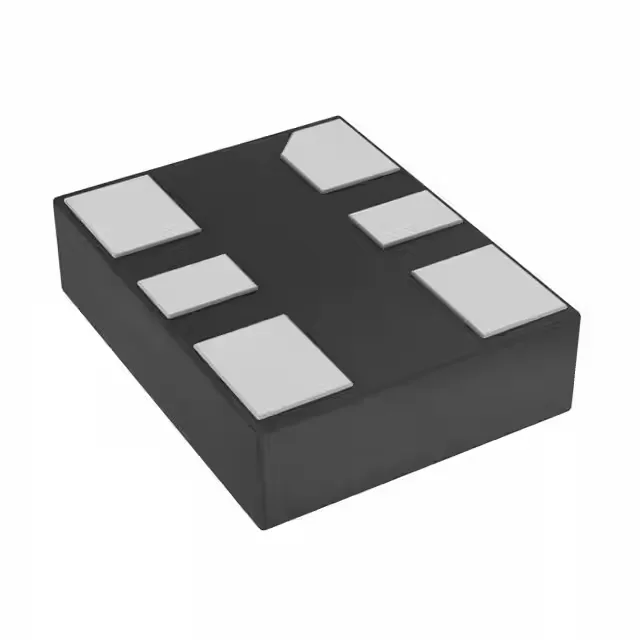
Microchip Technology DSC1121CM1-012.2880 — Crystals & Oscillators

DSC1121CM1-012.2880 – Microchip MEMS XO, 12.288 MHz, CMOS

MPNDSC1121CM1-012.2880
Active

Microchip Technology DSC1121 series, XO (Standard), 12.288 MHz CMOS output, ±50 ppm stability, 2.25 V–3.6 V supply, 6-SMD no-lead package, -55°C to +125°C operating range.

Independent supplier — new & surplus stockAuthenticity-screened · ESD-safe packingListing updated Aug 2026

Specifications

DSC1121CM1-012.2880 specifications
ParameterValue
TypeXO (Standard)
SeriesDSC1121
MountingSurface Mount
Supply voltage2.25V ~ 3.6V
Current - supply35mA
Current - supply (Disable)22mA
Frequency12.288 MHz
Frequency stability±50ppm
Operating temperature-55°C~125°C
Size (Dimension)0.126\" L x 0.098\" W (3.20mm x 2.50mm)
Height - seated0.035\" (0.90mm)
OutputCMOS
PackageTape & Reel (TR)
FunctionEnable/Disable
Base resonatorMEMS
Case6-SMD, No Lead

Product details

Why a MEMS oscillator at 12.288 MHz?

The DSC1121CM1-012.2880 is a MEMS-based standard oscillator (XO) delivering a 12.288 MHz CMOS clock — a frequency that lines up with T1/ framing, audio sample-rate converters, and Ethernet PHY reference inputs. That means this oscillator keeps its ±50 ppm stability in an engine bay, a satellite orbit, or a downhole tool — environments where a standard quartz XO would drift or fail.

Package, supply, and output — what to check on the BOM

6-SMD no-lead package, 3.20 mm x 2.50 mm footprint. That 13 mA saving matters in a battery-powered design if the clock can be stopped between bursts.

Frequently asked questions

Can DSC1121CM1-012.2880 replace a quartz crystal oscillator on my board?

Yes, if the board expects a CMOS-level clock input from an oscillator module. The DSC1121CM1-012.2880 is a complete XO with a MEMS resonator and output driver in one package — it drops in as a direct replacement for a standard 12.288 MHz quartz XO with the same 6-SMD footprint and supply voltage range. The MEMS construction eliminates the quartz cold-start drift and improves vibration tolerance, which can extend field life in high-shock applications.