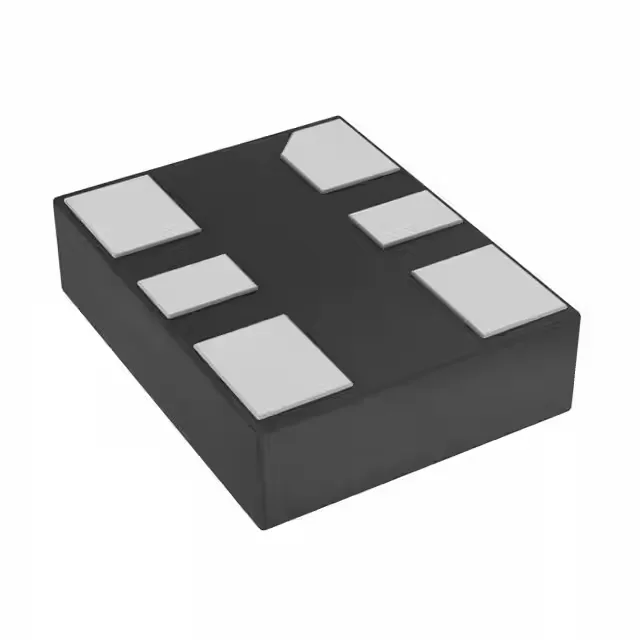
Microchip Technology DSC1121CL5-024.7500T — Crystals & Oscillators

DSC1121CL5-024.7500T MEMS XO 24.75 MHz CMOS AEC-Q100

MPNDSC1121CL5-024.7500T
Active

Microchip DSC1121CL5-024.7500T, MEMS XO (Standard), 24.75 MHz CMOS output, ±10 ppm stability, 2.25V–3.6V supply, AEC-Q100 qualified, 6-SMD package.

Independent supplier — new & surplus stockAuthenticity-screened · ESD-safe packingListing updated Aug 2026

Specifications

DSC1121CL5-024.7500T specifications
ParameterValue
TypeXO (Standard)
SeriesDSC1121
MountingSurface Mount
Supply voltage2.25V ~ 3.6V
Current - supply35mA
Current - supply (Disable)22mA
Frequency24.75 MHz
Frequency stability±10ppm
Operating temperature-40°C~105°C
Size (Dimension)0.126\" L x 0.098\" W (3.20mm x 2.50mm)
Height - seated0.035\" (0.90mm)
OutputCMOS
PackageTape & Reel (TR)
RatingsAEC-Q100
FunctionEnable/Disable
Base resonatorMEMS
Case6-SMD, No Lead

Product details

MEMS clock source with automotive-grade reliability

Supply flexibility and disable function

The 2.25V to 3.6V supply range covers 2.5V and 3.3V logic rails without a separate regulator, and the Enable/Disable pin lets a system controller gate the output — drawing 22 mA max when disabled versus 35 mA max when active. This matters for power-sensitive ECUs that shut down non-critical clocks during sleep modes.

Frequently asked questions

Is DSC1121CL5-024.7500T AEC-Q100 qualified?

Yes, the DSC1121CL5-024.7500T carries AEC-Q100 qualification, which means it has passed automotive-grade reliability stress tests including temperature cycling, ESD, and latch-up.

Does DSC1121CL5-024.7500T support a 3.3V supply?

Yes, the supply voltage range of 2.25V to 3.6V includes 3.3V. The oscillator can be powered directly from a 3.3V rail without an external LDO, simplifying the power tree.

Can DSC1121CL5-024.7500T replace a standard 24.75 MHz crystal oscillator?

Yes, it is a drop-in replacement for a 24.75 MHz crystal oscillator module with CMOS output. Because it uses a MEMS resonator rather than a quartz crystal, it does not require external load capacitors and offers better vibration and shock resistance. The Enable/Disable function may require a pull-up or pull-down on the control pin depending on the original circuit.