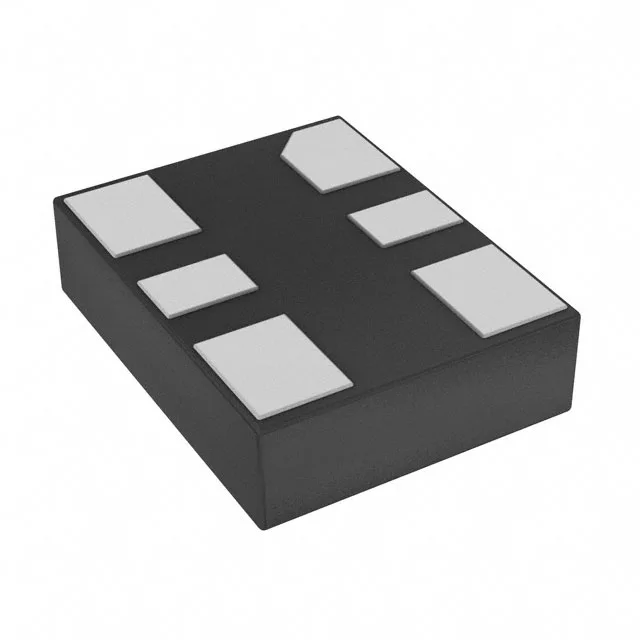
Microchip Technology DSC1121CI2-025.0012B — Crystals & Oscillators

DSC1121CI2-025.0012B MEMS Oscillator – AEC-Q100, 25.0012 MHz

MPNDSC1121CI2-025.0012B
Active

Microchip Technology DSC1121CI2-025.0012B, XO (Standard) MEMS oscillator, 25.0012 MHz, CMOS output, ±25 ppm stability, AEC-Q100 qualified, 6-SMD no-lead package.

Independent supplier — new & surplus stockAuthenticity-screened · ESD-safe packingListing updated Aug 2026

Specifications

DSC1121CI2-025.0012B specifications
ParameterValue
TypeXO (Standard)
SeriesDSC1121
MountingSurface Mount
Supply voltage2.25V ~ 3.6V
Current - supply35mA
Current - supply (Disable)22mA
Frequency25.0012 MHz
Frequency stability±25ppm
Operating temperature-40°C ~ 85°C
Size (Dimension)0.126\" L x 0.098\" W (3.20mm x 2.50mm)
Height - seated0.035\" (0.90mm)
OutputCMOS
PackageTape & Reel (TR)
RatingsAEC-Q100
FunctionEnable/Disable
Base resonatorMEMS
Case6-SMD, No Lead

Product details

AEC-Q100 MEMS oscillator for automotive timing

AEC-Q100 qualification qualifies this part for automotive-grade applications — under-hood ECUs, ADAS sensor modules, and infotainment systems that require the reliability screening and temperature cycling validation of the automotive standard. The Enable/Disable function allows the output to be tri-stated, reducing supply current from 35 mA (max) to 22 mA (max) when the clock is not needed — useful for power-save modes in battery-backed or ignition-off domains.

Sourced through independent distribution; quoted to order against the BOM quantity.

Frequently asked questions

Is the DSC1121CI2-025.0012B AEC-Q100 qualified?

Yes. The DSC1121CI2-025.0012B carries an AEC-Q100 rating, which means it has passed the automotive-grade qualification tests for temperature cycling, ESD, and reliability stress. This qualifies it for under-hood and chassis-domain applications where the ambient temperature can reach 85°C.

What is the output type and voltage range of the DSC1121CI2-025.0012B?

The output is CMOS, compatible with standard digital logic inputs.

What is the frequency stability of the DSC1121CI2-025.0012B?

This is sufficient for most automotive CAN, LIN, and Ethernet PHY reference clocks, though precision timing applications (e.g., some sensor synchronization) may require a tighter ±10 ppm grade.