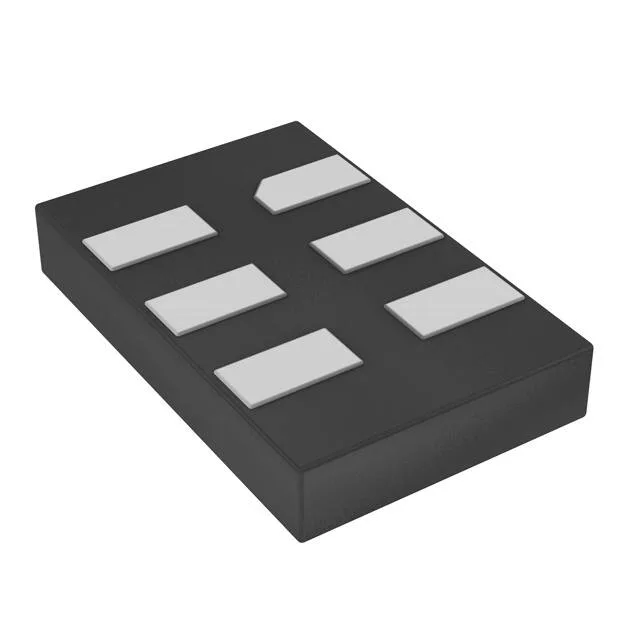
Microchip Technology DSC1121BI5-025.6000T — Crystals & Oscillators

DSC1121BI5-025.6000T MEMS Oscillator 25.6 MHz CMOS ±10 ppm

MPNDSC1121BI5-025.6000T
Active

Microchip Technology DSC1121BI5-025.6000T, XO (Standard) 25.6 MHz, CMOS output, ±10 ppm frequency stability, 2.25V–3.6V supply, -40°C to 85°C, 6-VDFN package, Tape & Reel.

Independent supplier — new & surplus stockAuthenticity-screened · ESD-safe packingListing updated Aug 2026

Specifications

DSC1121BI5-025.6000T specifications
ParameterValue
TypeXO (Standard)
SeriesDSC1121
MountingSurface Mount
Supply voltage2.25V ~ 3.6V
Current - supply35mA
Current - supply (Disable)22mA
Frequency25.6 MHz
Frequency stability±10ppm
Operating temperature-40°C~85°C
Size (Dimension)0.197\" L x 0.126\" W (5.00mm x 3.20mm)
Height - seated0.035\" (0.90mm)
OutputCMOS
PackageTape & Reel (TR)
FunctionEnable/Disable
Base resonatorMEMS
Case6-VDFN

Product details

Supply voltage spans 2.25V to 3.6V, so it runs from a 3.3V or 2.5V rail without an extra regulator — the wide range also covers 1.8V logic if your design drops that low.

Industrial temperature and MEMS ruggedness

Package and footprint for pick-and-place

Housed in a 6-VDFN package measuring 5.00 mm x 3.20 mm with a seated height of 0.90 mm max — a standard 5x3.2 mm oscillator footprint that places cleanly on a two-layer board without fan-out vias. Supplied in Tape & Reel (TR), which is the expected format for automated assembly. Check the MSL before the reflow profile — the VDFN package typically carries MSL 1 or 2, but confirm on the reel label to avoid popcorning.

Frequently asked questions

Is DSC1121BI5-025.6000T a direct drop-in replacement for standard 25.6 MHz CMOS oscillators?

Yes, the DSC1121BI5-025.6000T is a standard XO with CMOS output in a common 5.0 mm x 3.2 mm 6-VDFN footprint. It is a drop-in replacement for any 25.6 MHz CMOS oscillator with the same package and pinout — no board spin needed. The MEMS resonator adds better shock tolerance versus quartz, but the electrical interface is identical.

What are the benefits of MEMS vs quartz oscillators?

MEMS oscillators like this one offer better shock and vibration tolerance compared to quartz crystals, and typically have faster startup times. They also eliminate the quartz crystal's aging drift over temperature. The trade-off is that MEMS oscillators are often slightly higher cost at equivalent stability grades.