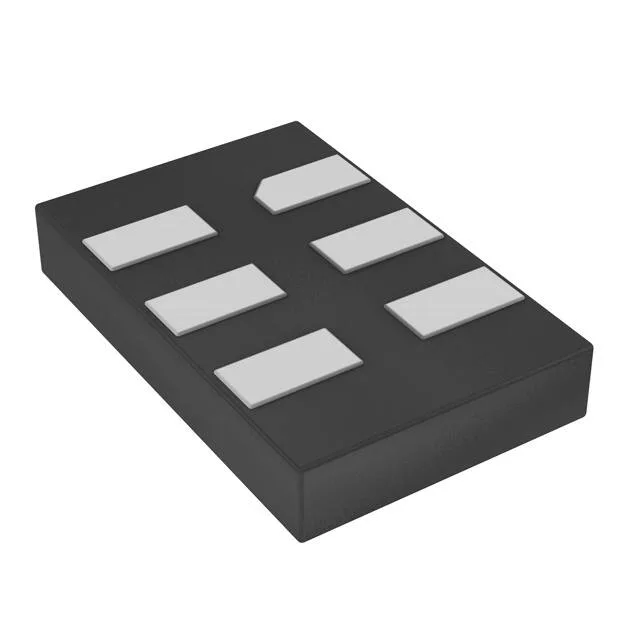
Microchip Technology DSC1121BI2-033.3330T — Crystals & Oscillators

DSC1121BI2-033.3330T MEMS Oscillator 33.333 MHz CMOS -

MPNDSC1121BI2-033.3330T
Active

Microchip DSC1121 series, XO (Standard) MEMS oscillator, 33.333 MHz, CMOS output, ±25 ppm stability, 2.25V–3.6V supply, -40°C to 85°C, 6-SMD, Tape & Reel

Sourced new & surplus through independent channelsAuthenticity-screened · ESD-safe packingListing updated Aug 2026

Specifications

DSC1121BI2-033.3330T specifications
ParameterValue
TypeXO (Standard)
SeriesDSC1121
MountingSurface Mount
Voltage2.25V ~ 3.6V
Current - supply35mA
Current - supply (Disable)22mA
Frequency33.333 MHz
Frequency stability±25ppm
Operating temperature-40°C~85°C
Size (Dimension)0.197\" L x 0.126\" W (5.00mm x 3.20mm)
Height - seated0.035\" (0.90mm)
OutputCMOS
PackageTape & Reel (TR)
FunctionEnable/Disable
Base resonatorMEMS
Case6-SMD, No Lead

Product details

33.333 MHz MEMS oscillator — what it replaces and why

The MEMS resonator is the key difference from a quartz crystal: it's inherently more shock- and vibration-tolerant, and it starts up faster because there's no crystal motional inductance to overcome. The 6-SMD package (5.00mm x 3.20mm) is a standard footprint that drops onto the same pads as many quartz oscillators, so a board designed for a quartz XO can often take this MEMS part without a layout change.

The 2.25V–3.6V supply range covers both 2.5V and 3.3V logic rails without an intermediate LDO — one oscillator line item serves two voltage domains. At 85°C the 35 mA max supply current is still within the thermal budget of a 4-layer board with no forced airflow — the MEMS die itself draws less than a comparable quartz oscillator at high temperature because its frequency vs temperature curve is flatter.

Enable/Disable function and disable current

When disabled, the oscillator still draws 22 mA max — that's the internal PLL and MEMS drive circuitry staying alive, not a true zero-power shutdown. For a battery-powered device that sleeps most of the time, a load switch ahead of the oscillator's Vdd will cut the disable current to zero; the Enable pin alone saves only the output buffer current.

Frequently asked questions

Is DSC1121BI2-033.3330T RoHS compliant?

The evidence does not explicitly state RoHS compliance, but the part is a standard commercial MEMS oscillator from Microchip, and the 6-SMD package is lead-free compatible. Confirm with the datasheet or your Microchip rep for formal certification.

What is the frequency stability of DSC1121BI2-033.3330T?

Frequency stability is ±25 ppm. That's tight enough for most Ethernet and USB applications — the total timing budget includes the oscillator's initial tolerance, temperature drift, and aging, so ±25 ppm leaves headroom for the rest of the clock tree.

Can DSC1121BI2-033.3330T replace DSC1121BI2-033.3330?

The base product number is DSC1121, and the suffix 'T' typically indicates Tape & Reel packaging. The two parts are electrically identical — the 'T' just changes the shipping format. If your BOM calls for the non-T version, the -033.3330T will work on the same board; just confirm the reel quantity matches your assembly needs.

What is the output type and drive strength of DSC1121BI2-033.3330T?

The output is CMOS — a rail-to-rail digital signal that drives standard logic inputs directly. Drive strength is not separately specified, but the 35 mA max supply current suggests the output buffer can sink/source enough current for a single load up to about 15 pF trace capacitance. For multiple loads or long traces, buffer the output with a clock fanout IC.

Does the DSC1121BI2-033.3330T require external capacitors?

No. Because the resonator is a MEMS device, not a quartz crystal, there are no load capacitors needed — the oscillator is self-contained. The output is a CMOS square wave that drives the load directly; just connect Vdd, GND, and the output pin.