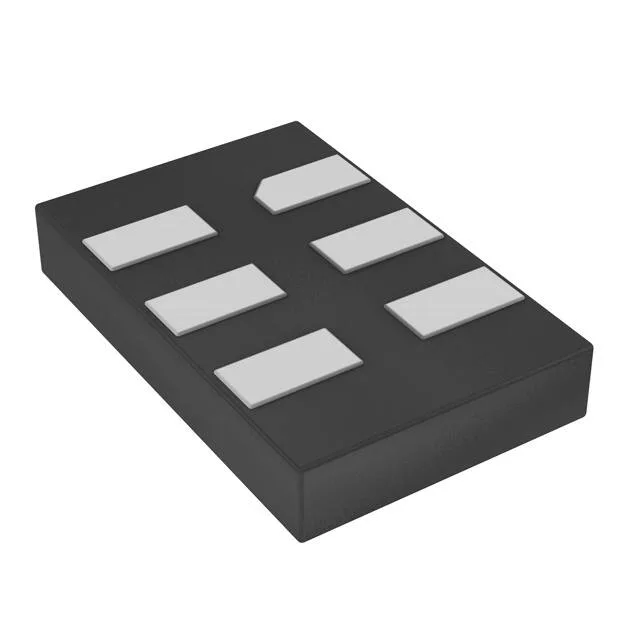
Microchip Technology DSC1121BI2-010.0000T — Crystals & Oscillators

DSC1121BI2-010.0000T MEMS Oscillator

MPNDSC1121BI2-010.0000T
Active

Microchip DSC1121 series, XO (Standard) MEMS oscillator, 10 MHz CMOS output, ±25 ppm frequency stability, 2.25V–3.6V supply, AEC-Q100 qualified, -40°C to 85°C, 6-SMD no-lead package.

Sourced new & surplus through independent channelsAuthenticity-screened · ESD-safe packingListing updated Aug 2026

Specifications

DSC1121BI2-010.0000T specifications
ParameterValue
TypeXO (Standard)
SeriesDSC1121
MountingSurface Mount
Voltage2.25V ~ 3.6V
Current - supply35mA
Current - supply (Disable)22mA
Frequency10 MHz
Frequency stability±25ppm
Operating temperature-40°C~85°C
Size (Dimension)0.197\" L x 0.126\" W (5.00mm x 3.20mm)
Height - seated0.035\" (0.90mm)
OutputCMOS
PackageTape & Reel (TR)
RatingsAEC-Q100
FunctionEnable/Disable
Base resonatorMEMS
Case6-SMD, No Lead

Product details

Automotive-grade MEMS clock source

The DSC1121BI2-010.0000T: AEC-Q100 qualified MEMS oscillator for automotive electronics — engine-control modules, body controllers, or infotainment systems that need a reliable clock source.

The wide supply range of 2.25V to 3.6V lets this oscillator run directly from a 2.5V or 3.3V rail without an intermediate LDO — one less component on the BOM. That disable current is still higher than a dedicated sleep-mode oscillator, so for battery-powered designs that spend most of their time asleep, consider gating the supply rail rather than relying on the enable pin alone.

The 6-SMD no-lead package measures 5.00 mm x 3.20 mm with a seated height of 0.90 mm, fitting tight-profile designs. Surface-mount assembly is straightforward with a standard land pattern.

Frequently asked questions

Can the DSC1121BI2-010.0000T be used in automotive applications?

Yes — it is AEC-Q100 qualified, which means it has passed the automotive-grade reliability stress tests including temperature cycling, ESD, and latch-up.

What is the output type and frequency stability of this oscillator?

It outputs a standard CMOS square wave at 10 MHz with ±25 ppm frequency stability. That stability is tight enough for CAN bus, LIN bus, and most MCU clock inputs without needing an external PLL or trim capacitor.