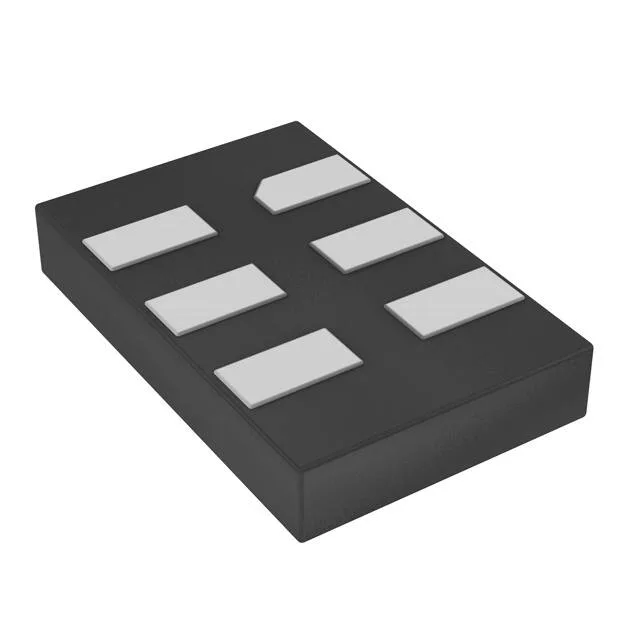
150 MHz MEMS clock with AEC-Q100 grade
The AEC-Q100 qualification means this part has passed automotive-grade reliability stress — temperature cycling, ESD, and latch-up — making it suitable for under-hood or chassis-domain clocking where a quartz crystal might fail under shock or wide temperature swings.
Supply range and power gating
The 2.25V to 3.6V supply range lets this oscillator run directly from a 2.5V or 3.3V rail without an extra regulator. The enable/disable pin cuts supply current from 35 mA max to 22 mA max when the output is tri-stated — useful for power-cycled subsystems in telematics or ADAS cameras that sleep between ignition cycles.
MEMS vs quartz — the reliability edge
The MEMS base resonator inherently withstands higher shock and vibration than a quartz crystal — no mechanical fracture risk under 50,000 g shock, no frequency jump from board flex. The ±50 ppm stability covers most precision clocking needs; if your design requires tighter ±25 ppm, the DSC1121 family offers that variant, but the ±50 ppm grade is the standard option for Ethernet, CAN, and general-purpose microcontroller clocks.
Package and PCB footprint
The 5.00mm x 3.20mm 6-SMD no-lead package matches the common 5.0 x 3.2 mm oscillator land pattern used across the industry. The 0.90 mm seated height fits tight mezzanine stacks. Surface-mount reflow profile follows standard JEDEC J-STD-020 for MSL — no special handling beyond normal moisture-sensitive assembly.