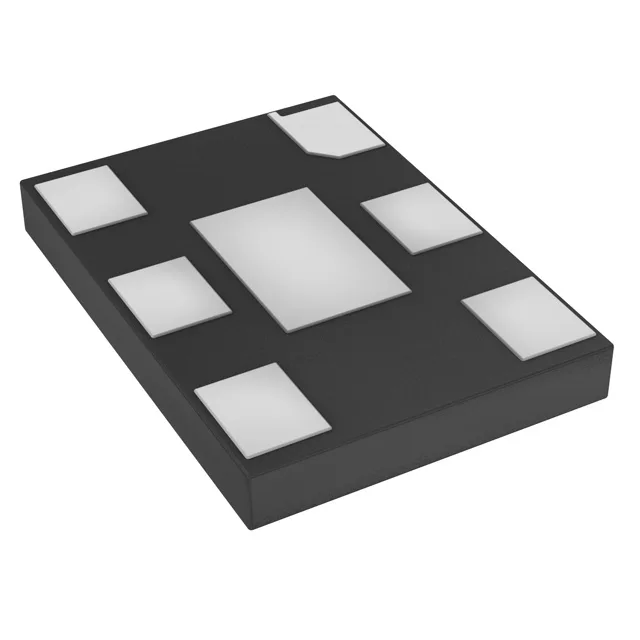
Microchip Technology DSC1121AM2-033.3330 — Crystals & Oscillators

DSC1121AM2-033.3330 MEMS Oscillator

MPNDSC1121AM2-033.3330
Active

Microchip Technology DSC1121AM2-033.3330, MEMS-based XO (Standard), 33.333 MHz CMOS output, ±25 ppm stability, 2.25V–3.6V supply, -55°C to 125°C, AEC-Q100 qualified, Enable/Disable function, 6-SMD package.

Sourced new & surplus through independent channelsAuthenticity-screened · ESD-safe packingListing updated Aug 2026

Specifications

DSC1121AM2-033.3330 specifications
ParameterValue
TypeXO (Standard)
SeriesDSC1121
MountingSurface Mount
Voltage2.25V ~ 3.6V
Current - supply35mA
Current - supply (Disable)22mA
Frequency33.333 MHz
Frequency stability±25ppm
Operating temperature-55°C~125°C
Size (Dimension)0.276\" L x 0.197\" W (7.00mm x 5.00mm)
Height - seated0.035\" (0.90mm)
OutputCMOS
PackageTube
RatingsAEC-Q100
FunctionEnable/Disable
Base resonatorMEMS
Case6-SMD, No Lead Exposed Pad

Product details

The DSC1121AM2-033.3330: This is a MEMS-based XO (Standard) from the DSC1121 series, outputting a 33.333 MHz CMOS clock. The ±25 ppm frequency stability (cite:) keeps jitter tight enough for 10/100 Ethernet PHY reference clocks and USB microcontroller timing. Supply voltage spans 2.25V to 3.6V (cite:), so it runs on a 2.5V or 3.3V rail without an extra regulator. No lab bench needed to verify this; a simple GPIO pull-down on the enable pin does it.

Military temp range and automotive qualification

The AEC-Q100 rating (cite:) adds the automotive reliability stress tests (preconditioning, temperature cycling, ESD), so it is a valid choice for under-hood ECUs or ADAS sensor modules where a standard commercial oscillator would not survive the thermal cycling.

Product status is Active (cite:) — Microchip is still producing this part, and it remains open for new designs. No last-time-buy window to track, no successor to evaluate.

Frequently asked questions

Is DSC1121AM2-033.3330 compatible with a 2.5V supply?

Yes. The supply voltage range is 2.25V to 3.6V (cite:), so a 2.5V rail is within spec. No external level shifting needed for the CMOS output at that voltage.