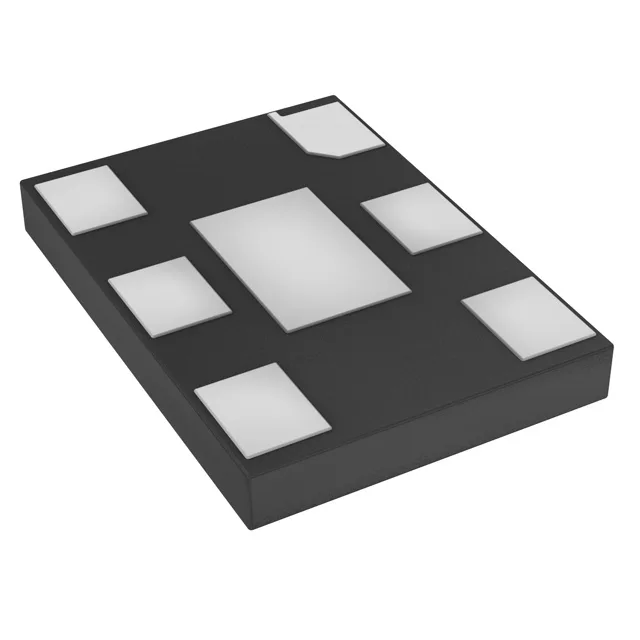
Microchip Technology DSC1121AM2-014.7456T — Crystals & Oscillators

DSC1121AM2-014.7456T MEMS XO – 14.7456 MHz, AEC-Q100

MPNDSC1121AM2-014.7456T
Active

Microchip DSC1121 series MEMS XO, 14.7456 MHz, CMOS output, ±25 ppm stability, AEC-Q100 qualified, -55°C to 125°C operating range, 6-SMD package.

Independent supplier — new & surplus stockAuthenticity-screened · ESD-safe packingListing updated Aug 2026

Specifications

DSC1121AM2-014.7456T specifications
ParameterValue
TypeXO (Standard)
SeriesDSC1121
MountingSurface Mount
Supply voltage2.25V ~ 3.6V
Current - supply35mA
Current - supply (Disable)22mA
Frequency14.7456 MHz
Frequency stability±25ppm
Operating temperature-55°C~125°C
Size (Dimension)0.276\" L x 0.197\" W (7.00mm x 5.00mm)
Height - seated0.035\" (0.90mm)
OutputCMOS
PackageTape & Reel (TR)
RatingsAEC-Q100
FunctionEnable/Disable
Base resonatorMEMS
Case6-SMD, No Lead Exposed Pad

Product details

14.7456 MHz MEMS XO with full military temp range

The DSC1121AM2-014.7456T: This is a MEMS-based XO (standard) from Microchip's DSC1121 series, delivering a 14.7456 MHz CMOS output with ±25 ppm frequency stability across the entire -55°C to 125°C range.

Supply voltage flexibility and disable function

Operates from 2.25V to 3.6V, covering both 2.5V and 3.3V logic rails without an external regulator — the Enable/Disable pin pulls the output to high-impedance and drops supply current from 35 mA to 22 mA max.

Frequently asked questions

What is the frequency stability of DSC1121AM2-014.7456T?

This is a total stability including initial tolerance, temperature drift, and aging — no separate temperature-only spec to add.

Can DSC1121AM2-014.7456T be used in automotive applications?

Yes — it carries AEC-Q100 qualification, which means it has passed the automotive-grade reliability stress tests (preconditioning, temperature cycling, high-temperature storage) and is PPAP-ready for production ECUs.

What is the difference between DSC1121AM2 and DSC1121BM2?

The difference is the frequency stability grade. The AM2 suffix denotes ±25 ppm stability, while the BM2 suffix denotes ±50 ppm stability. Both share the same package, pinout, and temperature range — the AM2 is the tighter-spec variant for applications with narrower timing margins.