Why choose a MEMS oscillator over a quartz crystal
The DSC1121AM1-030.0000 uses a MEMS resonator instead of a quartz crystal, which means better resistance to shock and vibration — a real advantage in automotive, industrial, or portable gear where a quartz can crack or drift. It is a standard XO with CMOS output at 30 MHz, so it drops straight into any digital clock input that expects a 3.3V or 2.5V CMOS-level signal.
Automotive qualification and temperature range
The ±50 ppm frequency stability holds across the full temperature range, so a CAN bus or Ethernet PHY clock stays within the receiver's ppm budget even when the enclosure gets hot.
Supply voltage flexibility and power consumption
The 2.25V to 3.6V supply range means the same part works on a 2.5V FPGA bank, a 3.3V microcontroller, or a 3.0V coin-cell-powered system — no separate LDO needed for the oscillator rail. Max supply current is 35 mA when enabled and 22 mA when disabled via the Enable/Disable function, which lets a low-power controller gate the clock off during sleep modes.
Package and board layout considerations
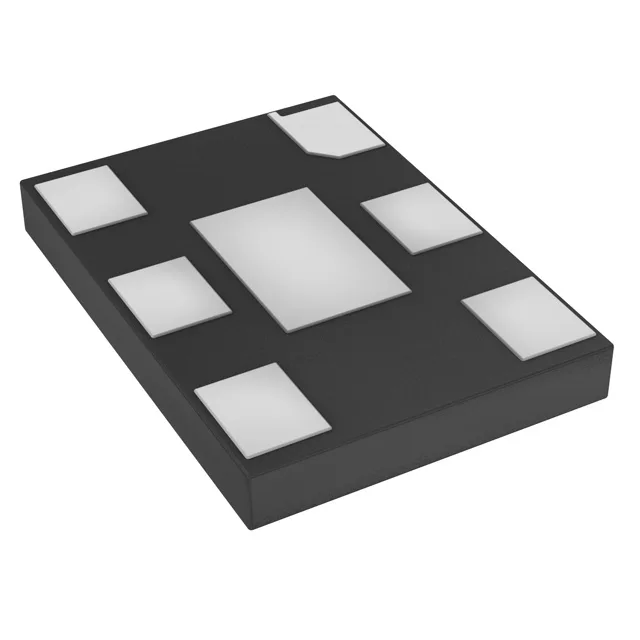
Housed in a 6-SMD, No Lead Exposed Pad package measuring 7.00mm x 5.00mm with a seated height of 0.90mm, it fits a standard 7x5 mm oscillator footprint and is hand-solderable with a fine-tip iron.