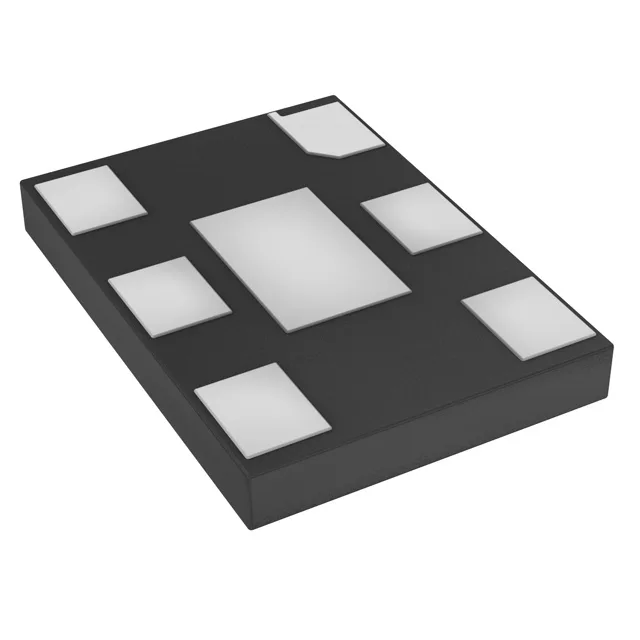
The MEMS die is sealed in a 6-SMD, no-lead exposed pad package (7.00mm × 5.00mm) and outputs a CMOS clock signal — no external load capacitors or crystal needed on the board. That tight stability keeps the clock edge jitter low enough for 100 Mbps Ethernet PHYs, FPGA transceivers, and high-speed ADCs where a ±25 ppm oscillator would eat into the timing budget.
Supply range and disable function
The supply voltage covers 2.25V to 3.6V, so it runs from a 2.5V or 3.3V rail without a separate LDO.
There is no NRND or EOL notice on this part, so it is safe to design into a new BOM today.
MEMS vs quartz — field-fit note
If your board sees vibration from a fan, pump, or vehicle chassis, the MEMS die is less likely to fracture than a quartz blank. The 6-SMD package is a drop-in footprint for standard 7×5 mm oscillators — check the pad layout against your existing quartz XO land pattern before committing.