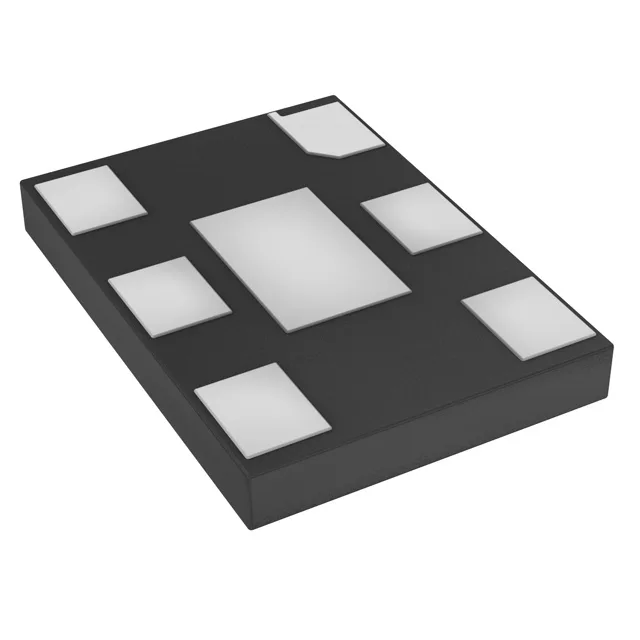
Microchip Technology DSC1121AL5-010.0000 — Crystals & Oscillators

DSC1121AL5-010.0000 Datasheet, Specs, Buy

MPNDSC1121AL5-010.0000
Active

Microchip Technology DSC1121 series, XO (Standard), 10 MHz, CMOS output, MEMS resonator, ±10 ppm stability, -40°C to 105°C, 2.25V to 3.6V supply, 6-SMD no-lead exposed pad package, tube packaging.

Sourced new & surplus through independent channelsAuthenticity-screened · ESD-safe packingListing updated Aug 2026

Specifications

DSC1121AL5-010.0000 specifications
ParameterValue
TypeXO (Standard)
SeriesDSC1121
MountingSurface Mount
Voltage2.25V ~ 3.6V
Current - supply35mA
Current - supply (Disable)22mA
Frequency10 MHz
Frequency stability±10ppm
Operating temperature-40°C~105°C
Size (Dimension)0.276\" L x 0.197\" W (7.00mm x 5.00mm)
Height - seated0.035\" (0.90mm)
OutputCMOS
PackageTube
FunctionEnable/Disable
Base resonatorMEMS
Case6-SMD, No Lead Exposed Pad

Product details

What this MEMS oscillator does on your board

It outputs a CMOS-level square wave, so it connects directly to the clock input of most MCUs, FPGAs, or Ethernet PHYs without a level translator.

The supply voltage range is 2.25V to 3.6V, so it runs on common 2.5V, 3.0V, or 3.3V rails without an extra regulator — a 3.3V design works directly.

Package and footprint — what to expect at the board

The 6-SMD no-lead exposed pad package measures 7.00 mm x 5.00 mm with a seated height of 0.90 mm — a standard footprint that matches many 7x5 mm oscillator pads, so a layout swap from a quartz oscillator to this MEMS part often requires no board spin. It ships in a tube, not tape-and-reel — factor that into your pick-and-place setup if your line expects reels; the tube quantity is set by the manufacturer and confirmed at RFQ.

Frequently asked questions

Can I use DSC1121AL5-010.0000 in a 3.3V design?

Yes — the supply voltage range is 2.25V to 3.6V, so a 3.3V rail is within spec. The CMOS output swings rail-to-rail, so it drives 3.3V logic inputs directly.

What is the output type of DSC1121AL5-010.0000?

The output is CMOS — a standard square-wave signal that connects directly to the clock input of most digital ICs without external level translation.